
For delivery, installation & multi-stop field teams
Skill-based driver assignment for jobs you can’t send just anyone to
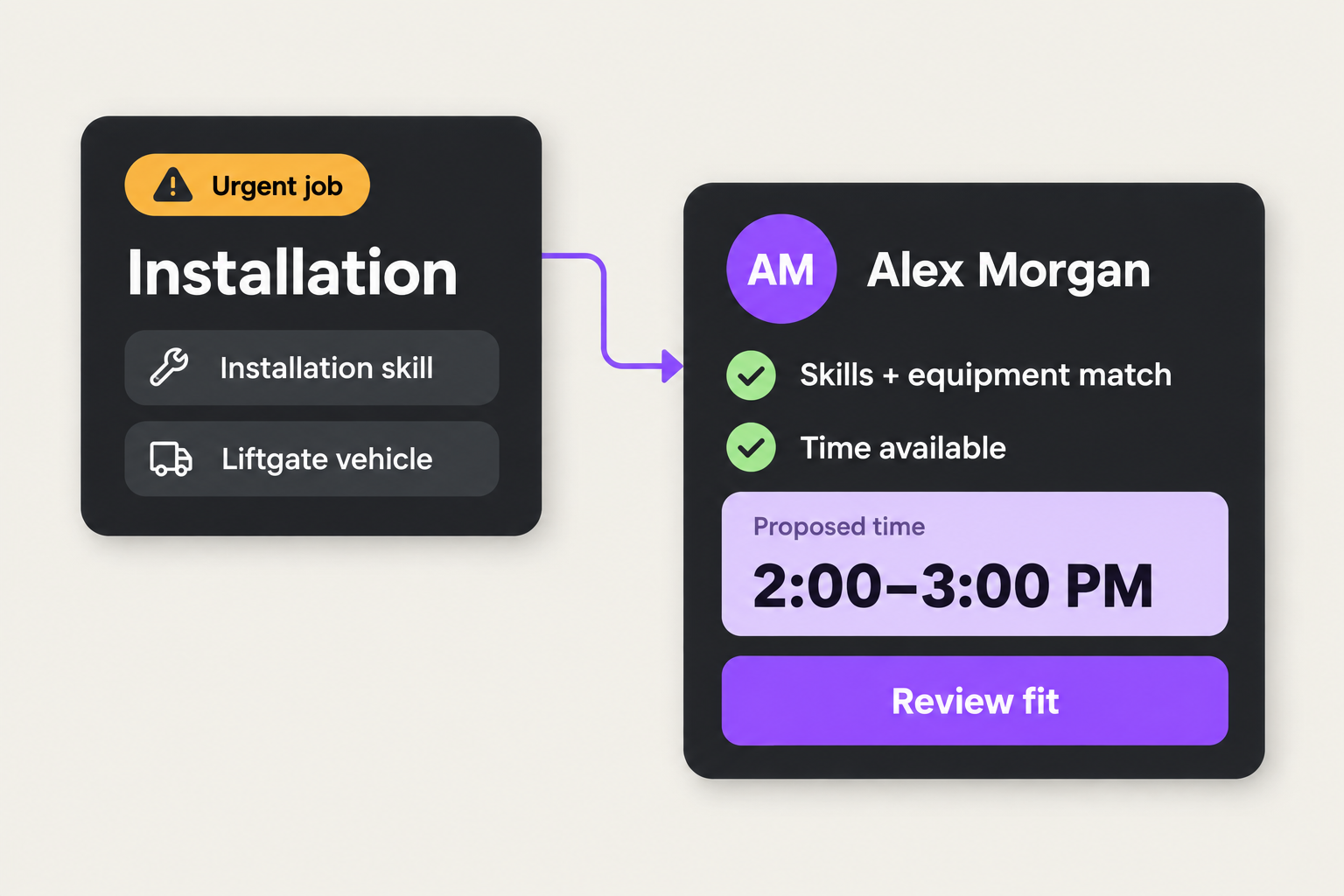
Match the job to someone with the skills, equipment and time to take it on. Upper AI Dispatcher checks your requirements against your team’s records and schedules, so you can assign work without comparing every driver by hand — then helps you reassign when that person or vehicle drops out mid-day.
Bring a job that’s difficult to assign. See who qualifies and where it fits.
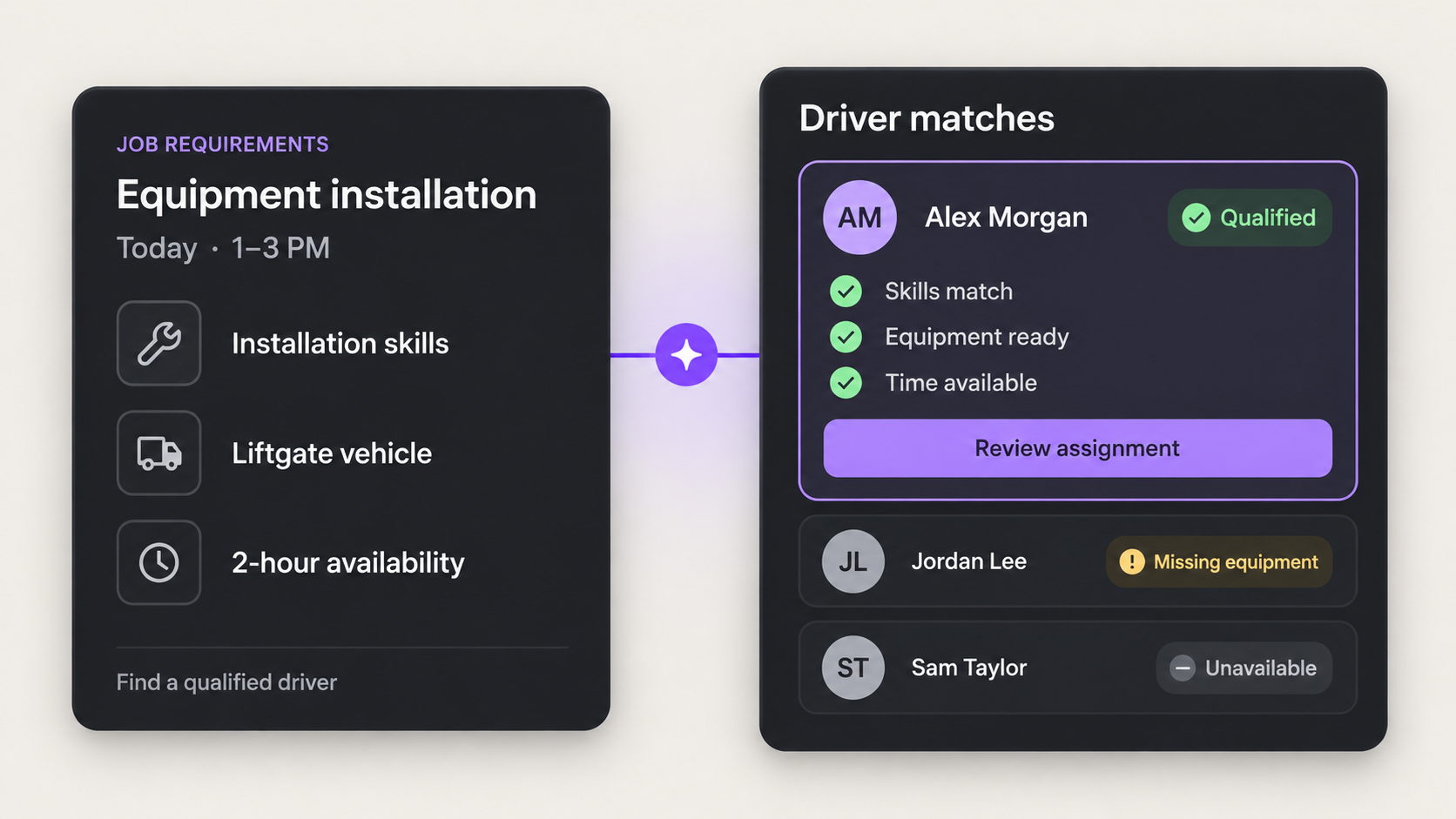
Put your dispatch knowledge to work on every assignment
You know who can handle the installation. But are they working today? Do they have the right vehicle? Can they reach the customer without overlapping another job?
Those checks repeat with every new assignment — and again when plans change. When the answers depend on one experienced dispatcher, covering the desk gets harder too.
Put that knowledge into Upper’s job requirements and team profiles. Upper compares eligible people and schedules for you, giving whoever is dispatching the same recorded rules to work from.
Round-robin and “closest available” create unfinished jobs, wasted trips, and office time spent fixing yesterday’s assignments. Skill-based driver assignment and equipment-based dispatch exist to stop that pattern — before the route leaves, and again when the day changes.
Equipment-based dispatch. Send the tools with the skills.
A qualified driver with the wrong vehicle can still leave you with an unfinished job, a wasted trip and another visit to arrange.
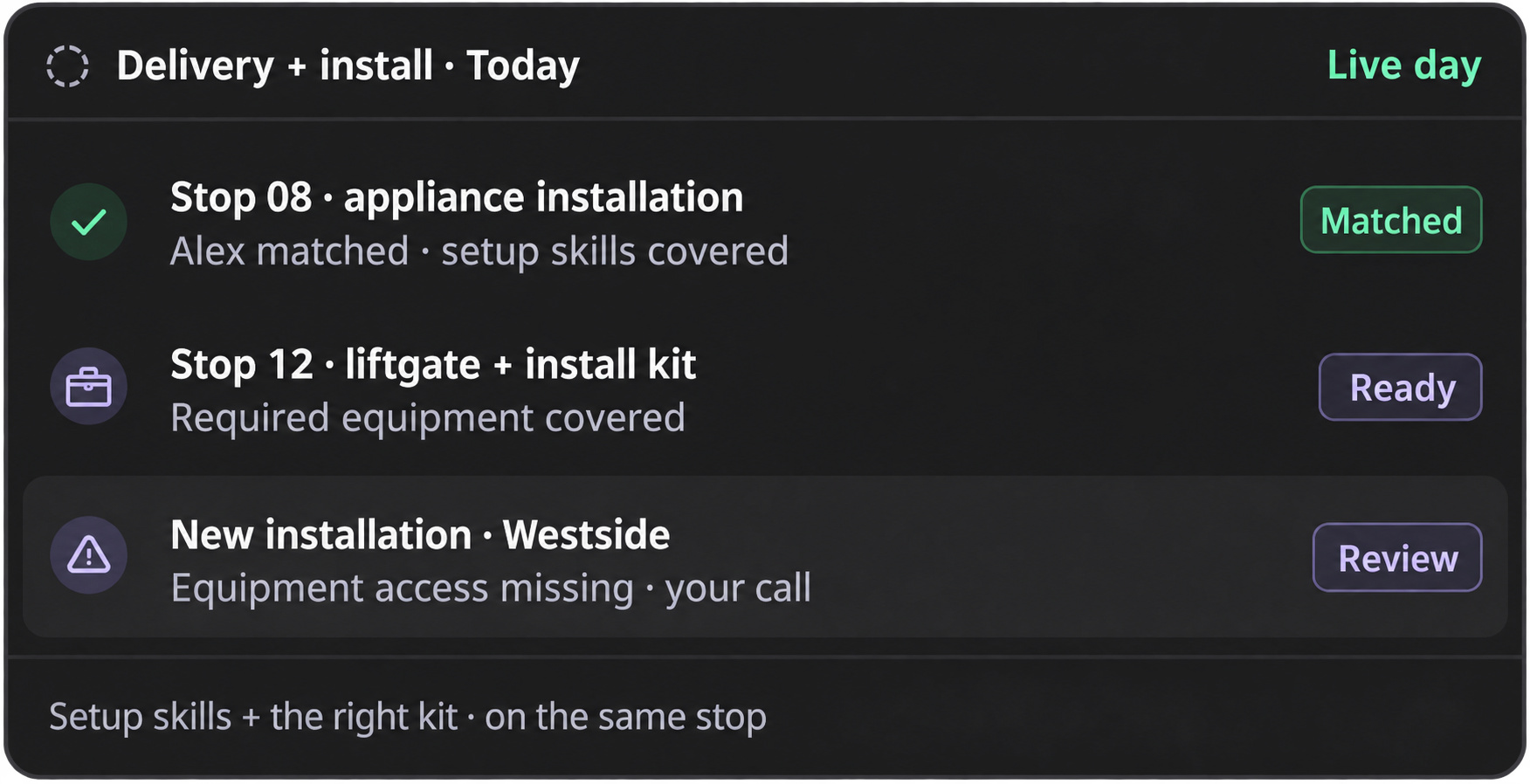
Upper checks each candidate’s recorded skills, certifications and equipment access against the job’s requirements. A candidate must meet every required skill and equipment requirement to be considered.
When a stop needs more than one skill, the assigned driver must hold all of them — same rule for equipment requirements recorded on the job.
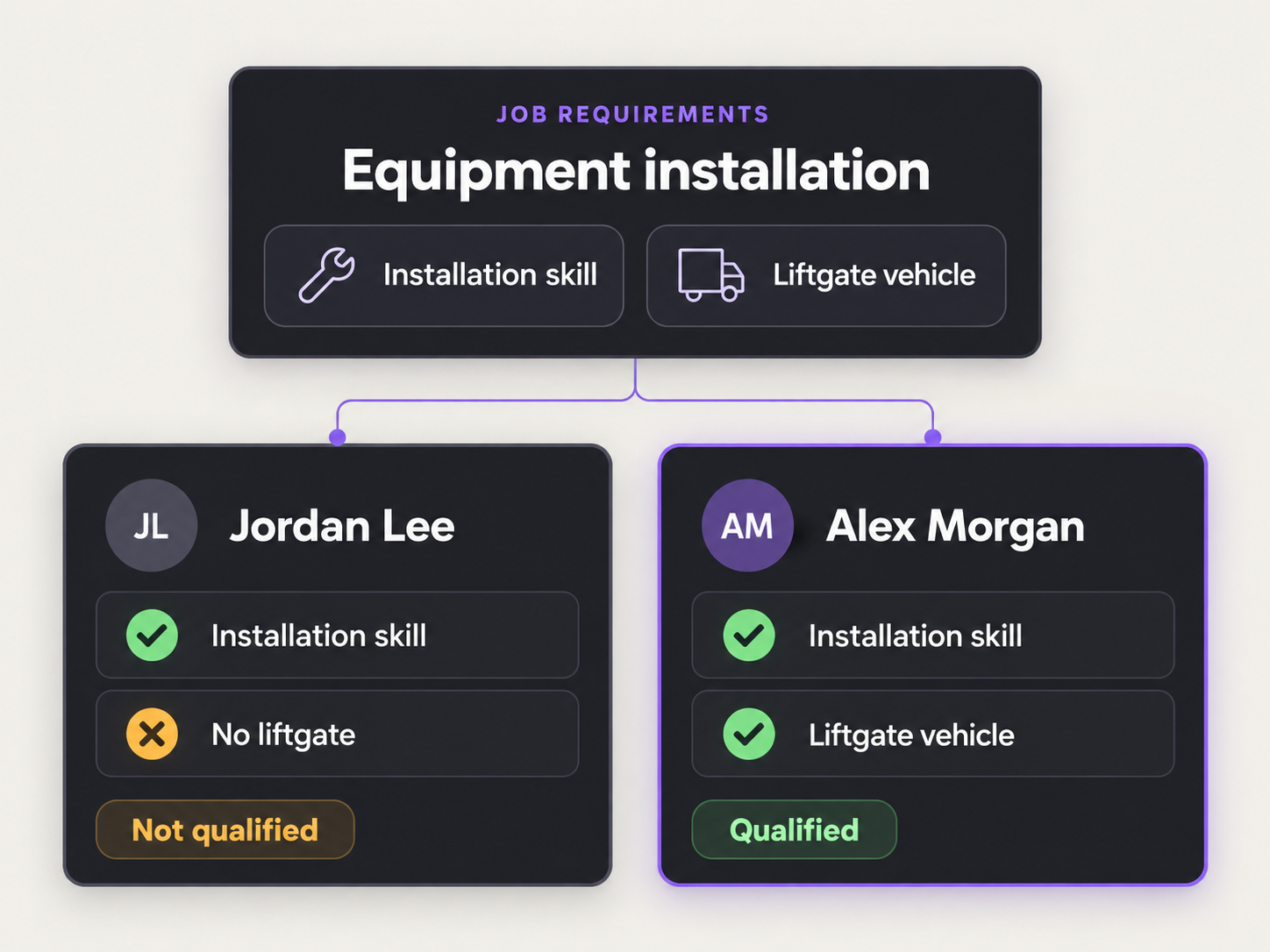
How skill-based AI dispatch works
Skill and certification matching
Only people who hold the required qualifications stay eligible.

Equipment and vehicle fit
The match includes recorded equipment access — capacity, type, and configuration — not only the person.

Schedule and route fit
Availability, service areas, working hours, workload, capacity, travel and time on site.

Explained recommendations
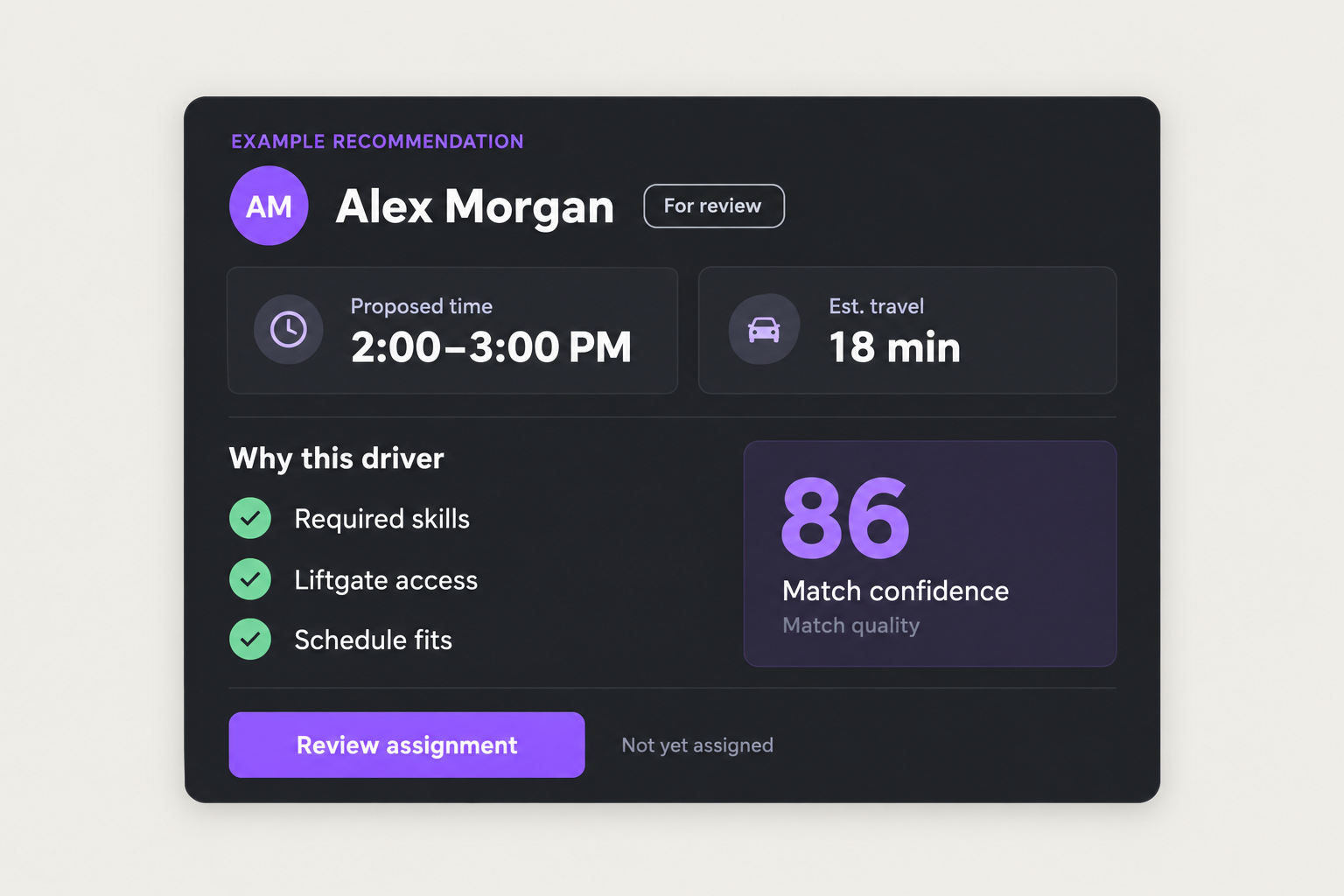
Each suggestion shows reasoning and a confidence score so you can answer “why this person?” before you act.

Live reassignment
When someone calls out, a vehicle drops offline, or new work arrives, Upper re-decides against the same requirements.

Know where the job fits before you commit
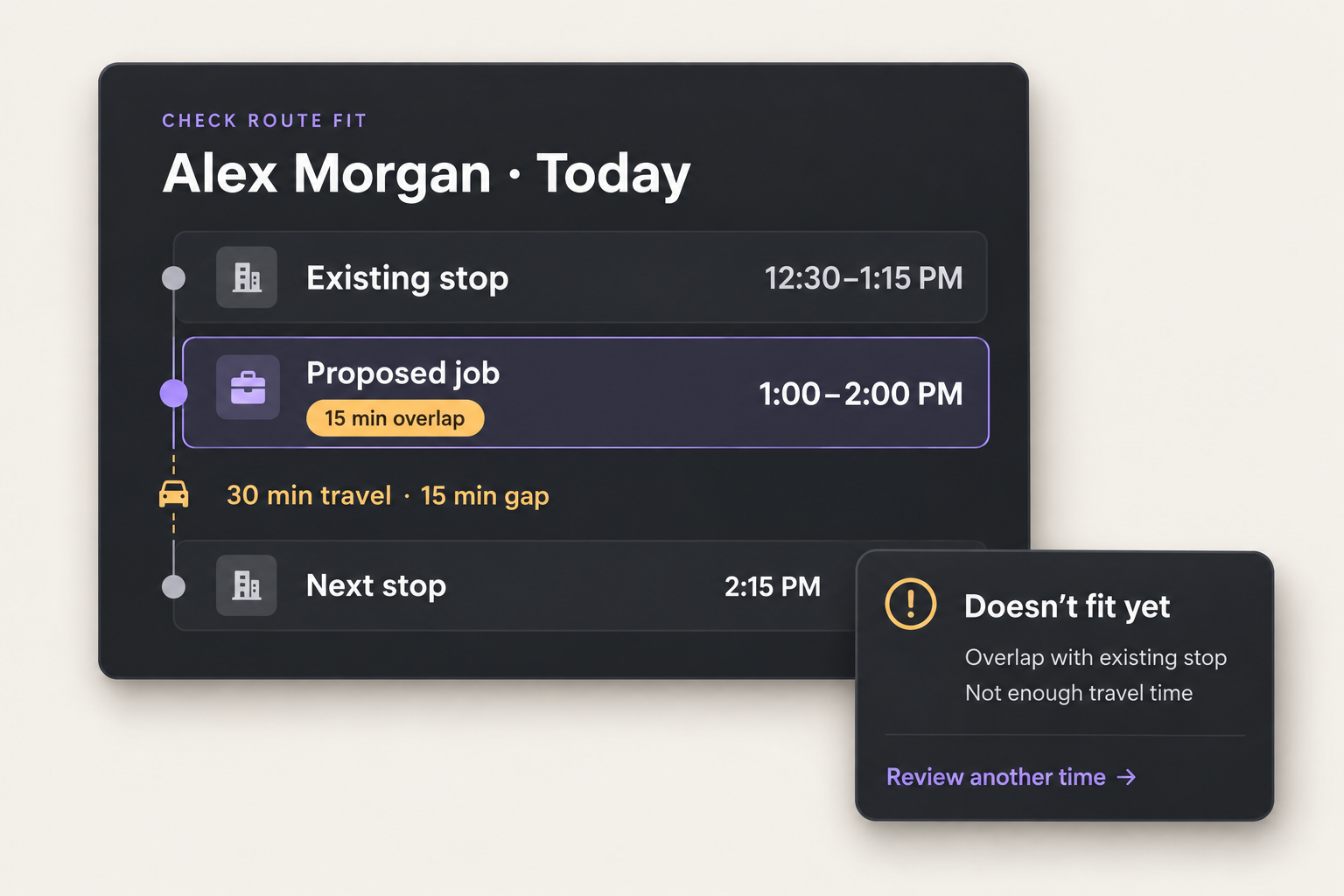
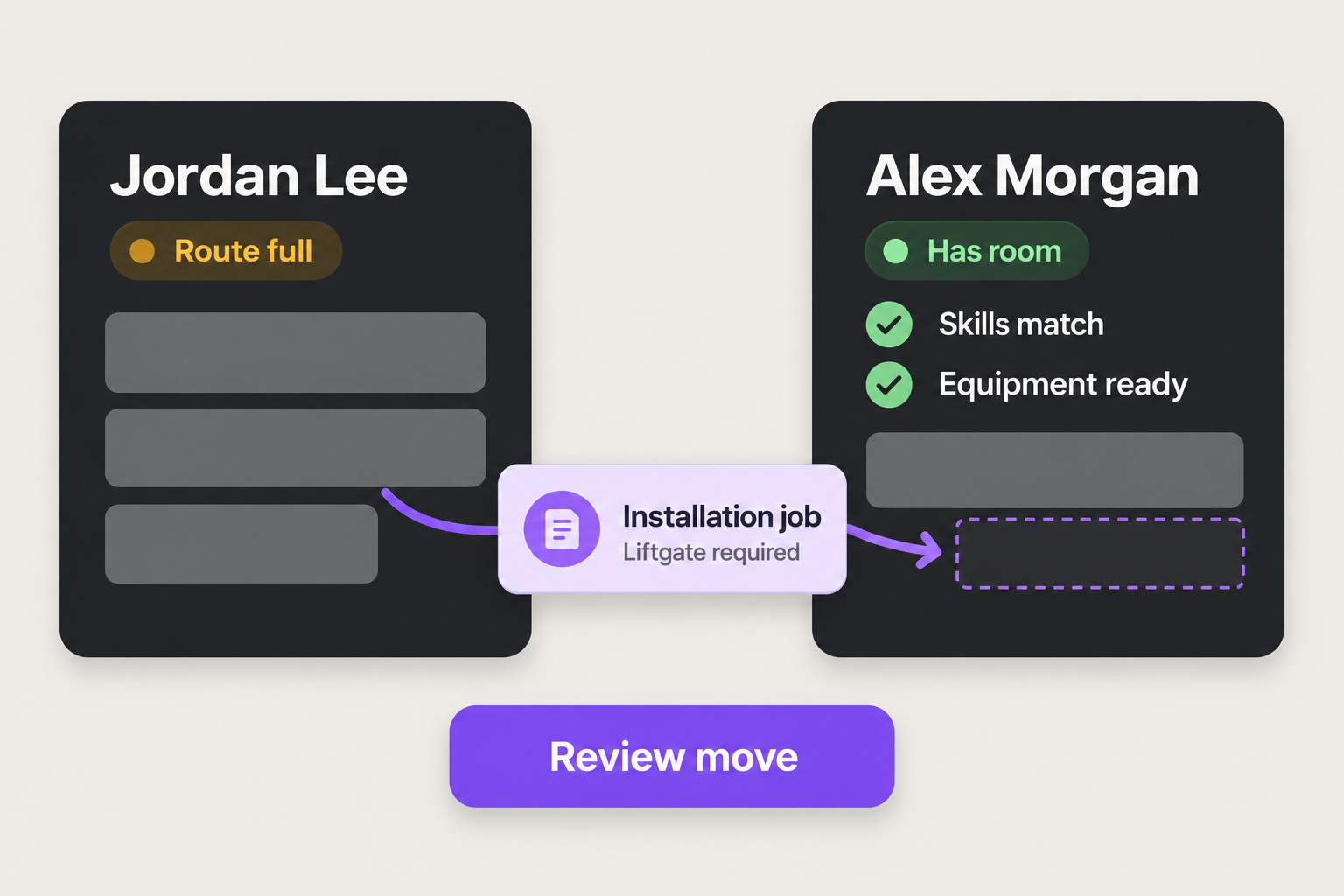
Your qualified driver may already have a full route. Upper checks availability, service areas, working hours, workload and capacity settings, then evaluates what the new assignment would do to the day’s route.
Review the proposed start and end times, with overlaps and impossible travel gaps flagged. You can assess the extra stop before making a commitment that affects the rest of the day.
If no eligible option exists, Upper shows the blocking reason. Your team can arrange qualified cover, free equipment, or offer another time — before promising the customer.
Change the assignment. Keep the requirements.
When the usual driver calls out, you still need someone who meets the job’s requirements. Upper uses the job’s existing requirements to suggest replacements, so you don’t restart matching from scratch.

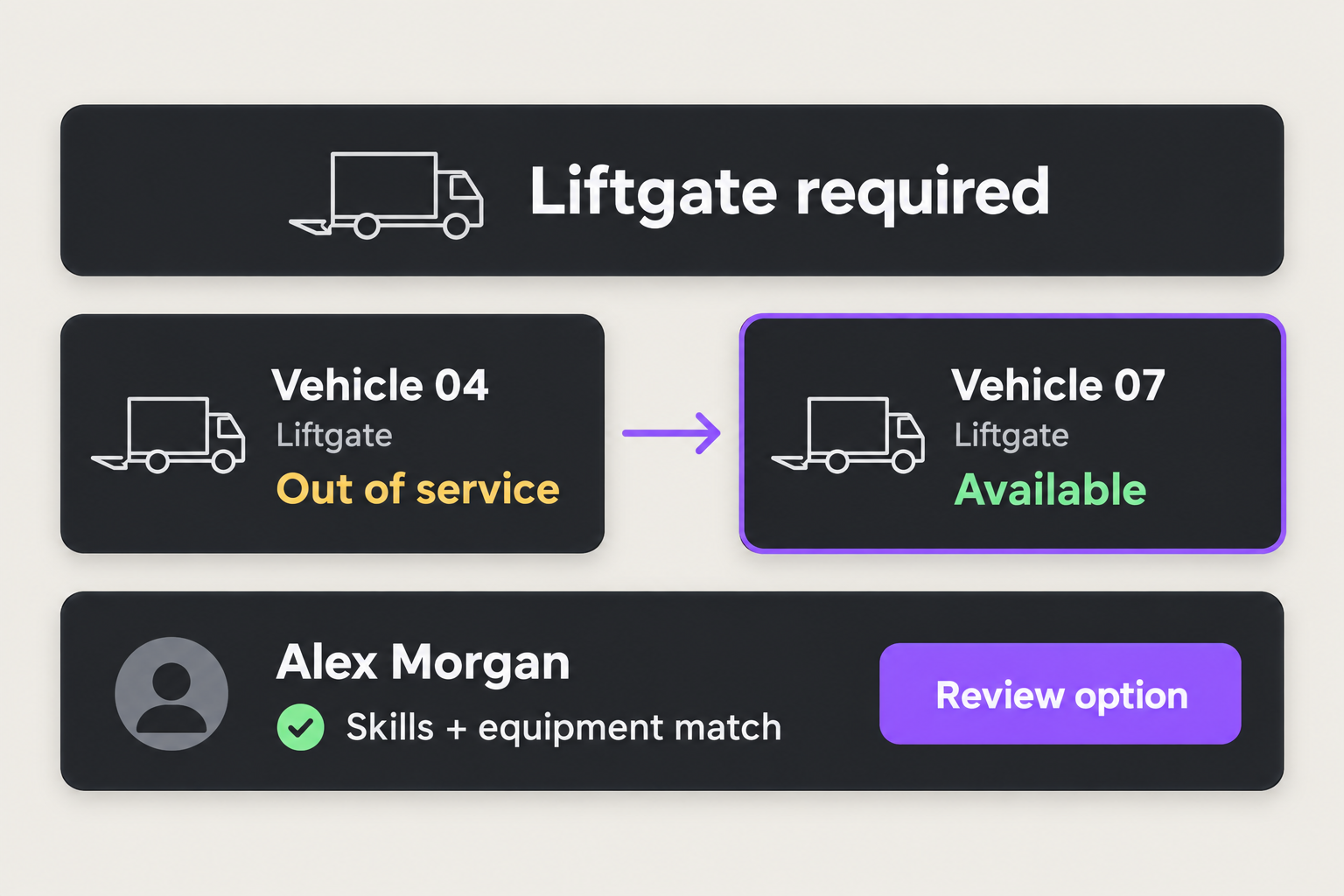
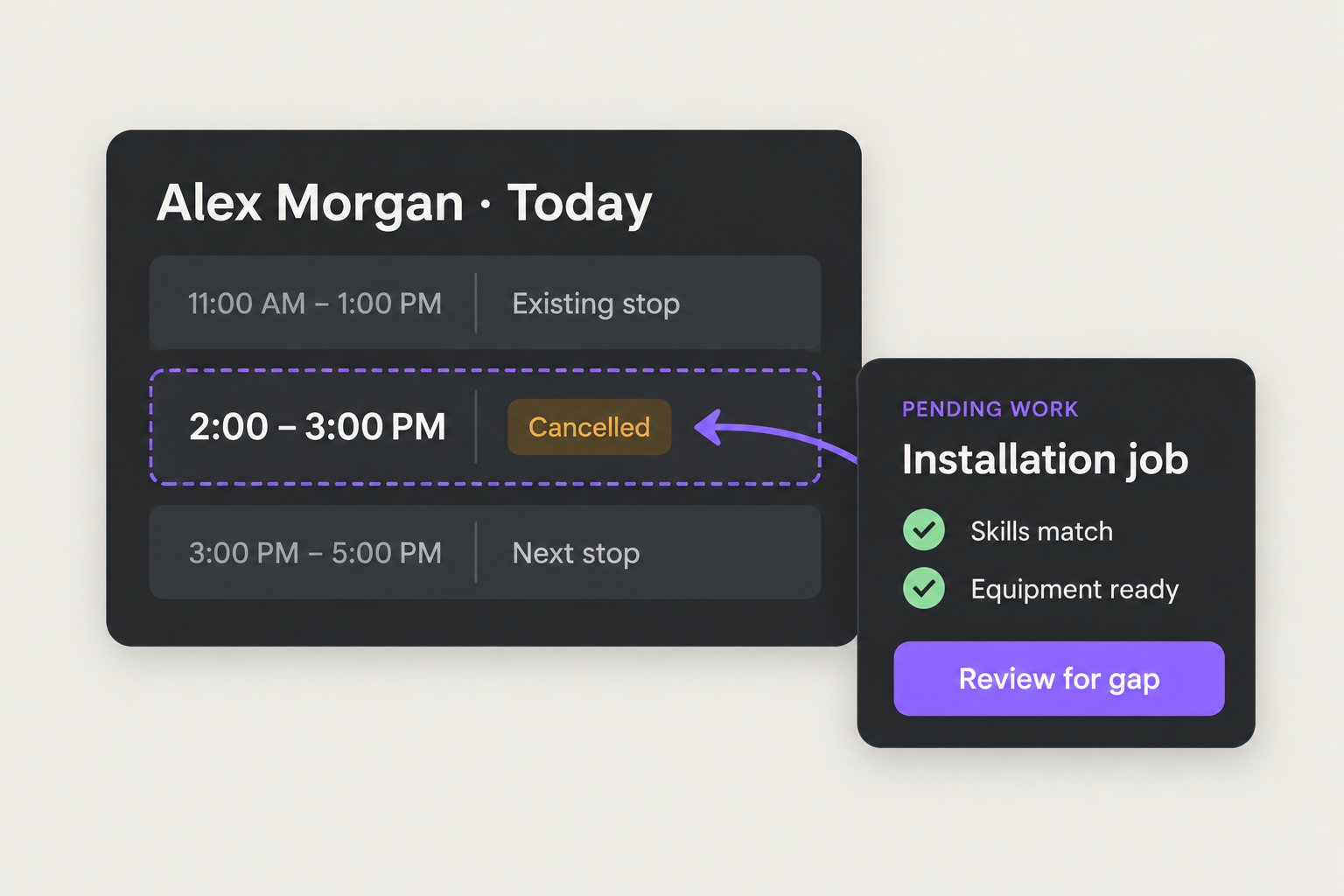
If nobody fits, Upper shows what is blocking the assignment. Unresolved work stays visible until your team fixes cover or resets the customer expectation.
Skill-based AI dispatch with recommendations you can check
Know why someone was suggested before sending them out. Each recommendation includes the person, proposed times, estimated travel, confidence score and reasoning.
A confidence score describes match quality — it is not a promise of on-time delivery.
Start by reviewing suggestions yourself. When you are ready, let Autopilot accept routine matches above your chosen confidence threshold. Critical conflicts are never automatically accepted. Your dispatcher reviews recovery changes and handles work that cannot fit.
See a qualified match — and a case where nobody qualifies.
Set up the requirements you use every day
Import jobs and team records from CSV, then configure the information Upper needs to make a match.
Required skills saved on job types carry through to repeat work, reducing the setup needed for each new job.
Who can do the work:
Record qualifications, equipment access, working hours and service areas.
What the job needs:
Define required skills on job types and add equipment requirements to the relevant jobs.
What changes day to day:
Keep availability, qualifications and equipment access current.
Software only — runs alongside the telematics and GPS you already have. Upper decides who and what gets the work; your existing tracking stays in place.
Built for multi-stop work where qualifications matter


Not written for long-haul load-board brokerage or emergency CAD dispatch.
Frequently asked questions
What is skill-based driver assignment?
Skill-based driver assignment matches jobs with drivers whose recorded skills and qualifications meet the work’s requirements. When a stop needs more than one skill, the assigned driver must hold all of them. Upper then considers availability, workload and travel among eligible candidates.
What is skill-based AI dispatch?
Skill-based AI dispatch automatically recommends the best-fit driver, crew or technician by matching skills, certifications and job dependencies against real-time location, capacity and hours — instead of only the closest or next-available person.
What is equipment-based dispatch?
Equipment-based dispatch assigns work based on the specific vehicle or equipment the job requires — not only who is free nearby — and helps avoid sending an unfit unit or double-booking the same recorded access across overlapping work.
How is skill-based AI dispatch different from assigning the nearest driver?
A nearby driver may lack a required skill or the equipment to complete the job. Upper checks those requirements first, then considers schedule and route fit among eligible candidates. Proximity does not make up for a missing required skill.
How is this different from basic route optimization?
Route optimization sequences stops. Skill- and equipment-based AI dispatch decides who and what can take the work, then helps re-decide when the day changes.
Can we keep sending the same person to a repeat customer?
Upper can prefer someone who has served the customer before, subject to eligibility and availability. That preference does not override the job’s requirements or guarantee the same person for every visit.
Does equipment-based dispatch track or reserve shared tools?
Equipment matching uses the access recorded on team profiles. It does not automatically track or reserve individual shared assets. Update records when equipment moves or a vehicle becomes unavailable.
Does Upper verify certifications?
Your team verifies qualifications and maintains the records used for matching. Upper checks candidates against the requirements and records you provide.
Can Autopilot send unqualified drivers?
No. Eligibility rules filter the pool first. Autopilot only clears routine matches that pass your rules and threshold. Critical conflicts stay with your team.
What if no one is eligible?
Upper shows the blocking reason and keeps the stop visible so your team can fix cover or reset the customer expectation before promising.
Can Upper work with our existing system?
CSV import is available for jobs and team records. During the demo, review how work enters your current system and where updates happen. Confirm the available connection and update process for that workflow. Upper works alongside telematics, GPS and CRM already in use.
How does this relate to Upper AI Dispatcher?
This is how Upper AI Dispatcher makes assignment decisions. The parent AI dispatch software page covers the full live-day product; this page goes deep on skills and equipment.
What does it cost?
Request a quote for the workflow you need, including automation scope, setup and any messaging or integration work.
Bring us a job that’s hard to assign
Show us the skills it needs, the equipment it depends on and the schedule it has to fit.
We’ll walk through the matching process, a replacement and a case where nobody qualifies — using the decisions your dispatcher faces every day.