

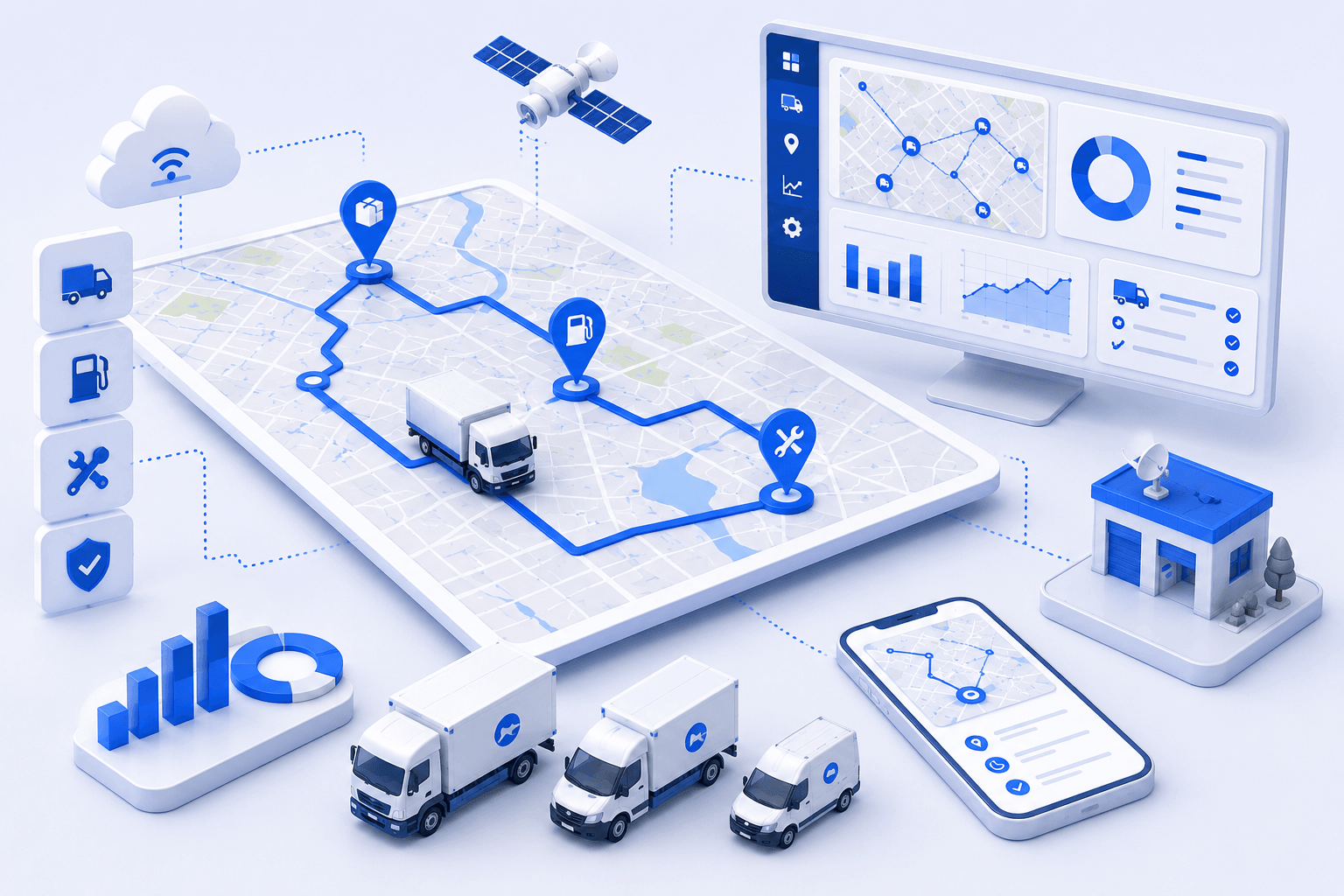
Fleet managers invest in GPS tracking to gain visibility into their operations. But when drivers disable GPS tracking, that visibility disappears, and the money spent on tracking technology delivers nothing.
This is not a fringe problem. According to Escort TD, external GPS tampering is one of the leading causes of fuel loss and theft, with up to 30% fuel theft reported.
The consequences go beyond missing data points. Disabled tracking creates liability exposure during accident investigations, customer service failures when ETAs vanish, and route compliance blind spots that hide fuel theft, unauthorized stops, and overtime fraud.
This guide covers why drivers disable tracking, the operational cost of tracking gaps, practical detection methods, and a complete policy framework that balances fleet accountability with the driver trust needed to make tracking work long-term.
Table of Contents
- Why Drivers Disable GPS Tracking
- The Operational Cost of Tracking Gaps
- How to Detect When Drivers Tamper With Tracking
- How to Build a Tracking Policy That Drivers Actually Accept
- Technical Safeguards That Reinforce Your Policy
- Build Fleet Accountability Without Surveillance Using Upper
- Frequently Asked Questions
Why Drivers Disable GPS Tracking
Understanding the motivation behind tracking tampering is the first step toward solving it. Jumping straight to enforcement without addressing root causes creates an arms race between fleet managers and drivers that nobody wins.
Privacy Concerns and Personal Device Boundaries
The most common reason drivers disable GPS tracking is privacy. Drivers who use personal phones for work worry that their employer can see where they go after hours, on weekends, and during personal errands. When the tracking policy does not explicitly state when tracking is active and when it stops, drivers assume the worst.
Legal gray areas compound the issue. In several states, tracking personal devices without clear consent creates potential privacy violations. Drivers who hear about these risks from coworkers or online forums become more motivated to take matters into their own hands.
Performance Anxiety and Micromanagement Perception
Drivers who feel that every stop, break, and minor detour is being scrutinized develop an adversarial relationship with tracking. When a fleet uses driver tracking data primarily for write-ups and disciplinary actions rather than coaching and support, drivers learn that the tracker is a punishment tool.
A 40-vehicle HVAC fleet in Dallas noticed tracking gaps spiking after management started issuing warnings based on GPS data. The fleet manager had been writing up drivers for 10-minute coffee stops. The result was predictable: drivers started turning off location services during breaks. The minor compliance issue was resolved, but a much bigger tracking problem took its place.
The distinction between accountability tracking and surveillance tracking matters. Accountability means verifying that the route was followed and deliveries were completed. Surveillance means monitoring every movement for infractions. Drivers can tell the difference.
Technical Workarounds Drivers Actually Use
The methods drivers use to defeat tracking range from simple to sophisticated. The most common is turning off location services or switching to airplane mode on their phone. This works immediately on phone-based tracking and leaves a clean gap in the data.
More tech-savvy drivers use GPS spoofing apps that broadcast a fake location to the tracking platform. These apps have been downloaded over 50 million times on Android alone. For OBD-equipped fleets, physical interference includes unplugging the device, wrapping it in aluminum foil to block signal, or in rare cases, using aftermarket GPS signal jammers.
Understanding why drivers disable tracking is the first step toward building a system they will not want to circumvent.
The Operational Cost of Tracking Gaps
Tracking gaps are not just an inconvenience. They represent quantifiable financial losses that compound across every vehicle and every shift where data is missing.
Route Compliance and Customer Service Failures
When a driver’s location data disappears, dispatchers lose the ability to provide accurate ETAs to customers. Calls come in asking where the delivery is, and the honest answer is “we do not know.” That answer damages customer relationships and generates complaints that take management time to resolve.
Missed deliveries with no verifiable proof of delivery become he-said-she-said disputes. The customer says the driver never showed. The driver says they attempted delivery. Without GPS evidence, the fleet absorbs the cost of redelivery or a refund with no way to determine what actually happened.
Liability and Insurance Exposure
Accident investigations rely heavily on GPS data to reconstruct what happened, where, and when. When tracking data has gaps, the fleet loses a critical piece of evidence. Workers’ compensation claims become harder to verify or dispute when there is no route data showing where the driver was at the time of the reported injury.
Insurance carriers are increasingly factoring tracking data completeness into premium calculations. Fleet vehicles driven without active tracking log 12 to 18% more miles than tracked vehicles, according to the Verizon Connect Fleet Index. Those extra miles represent unquantified risk that insurers price accordingly.
Hidden Costs: Fuel Theft, Unauthorized Stops, and Overtime Fraud
Untracked miles correlate directly with unauthorized vehicle use. Drivers who disable tracking to run personal errands during work hours consume fuel the fleet pays for. Fuel card transactions at locations that do not appear in route history are a red flag, but without tracking data, there is nothing to cross-reference against.
Overtime claims are another vulnerability. A driver reports 10 hours on the road, but tracking data only covers 7 hours. The missing 3 hours could be legitimate driving with a disabled tracker, or it could be padded time. Without data, fleet managers approve the overtime or start a conflict with no evidence to support either position.
The financial impact of tracking gaps often exceeds the cost of the tracking system itself, making prevention a clear ROI decision.

See it in action
Close the Tracking Gap in Your Fleet
Real-time driver location, route compliance alerts, and proof of delivery that eliminate blind spots in your operation.
How to Detect When Drivers Tamper With Tracking
Before building a prevention policy, fleet managers need the ability to identify when tampering is already happening. These detection methods work with most tracking platforms.
Automated Alerts for Tracking Interruptions
Configure your tracking platform to send notifications whenever a driver’s GPS signal drops for more than a set threshold (typically 10 to 15 minutes during active duty hours). Single incidents may be innocent: a dead phone battery, a parking garage with no signal. Repeated patterns at the same time each day or at the same location point to intentional interference.
Compare expected route duration against actual logged time. If a route should take 6 hours and the driver reports completing it in 6 hours but the tracker only shows 4 hours of data, those 2 missing hours need explanation.
Cross-Referencing Tracking Data With Other Systems
Fuel card transactions provide an independent data layer. If a driver’s fuel card shows a purchase at a gas station 15 miles off-route during a period with no GPS data, the picture becomes clearer. Similarly, customer feedback about missed time windows during tracking gaps creates a pattern that goes beyond coincidence.
Delivery confirmation timestamps that do not match GPS data are another indicator. If a driver marks a delivery complete at 2:15 PM but the last GPS ping was at 1:30 PM, the gap warrants investigation.
Detection methods catch the problem after it happens. A proactive tracking policy prevents it from starting.
How to Build a Tracking Policy That Drivers Actually Accept
This is where most fleet operations either succeed or fail at tracking adoption. A policy that drivers understand, helped shape, and see benefiting them prevents more tampering than any tamper-proof hardware ever will.
Step 1: Define What You Track and Why
Scope the Tracking to Business Hours and Business Activities
The single most effective step in reducing tracking resistance is telling drivers exactly when tracking starts and when it stops. A policy that states “tracking is active from clock-in to clock-out and is automatically disabled outside scheduled hours” removes the biggest driver concern immediately.
A 55-vehicle home services company in Phoenix saw tracking compliance jump from 71% to 94% within 30 days of implementing automatic tracking windows. Once drivers saw the tracker shut off when they clocked out, complaints about the tracking system dropped to near zero.
Configure your tracking platform to enforce these boundaries automatically. A policy promise means nothing if the technology tracks 24/7 regardless. Using a geofenced driver clock-in app helps automate driver attendance tracking and prevent time theft in delivery operations.
Explain the Business Purpose in Driver-Facing Language
Write a one-page tracking rationale in plain language, not legal boilerplate. Include specific examples of how tracking benefits drivers: faster dispatch because dispatchers can see who is closest to an urgent job, accurate mileage records for reimbursement, and dispute resolution when a customer falsely claims a delivery was missed.
Drivers who understand that driver fleet tracking protects them as much as it monitors them cooperate at significantly higher rates.
Step 2: Set Clear Consequences and Escalation Paths
Create a Tiered Response for Tracking Violations
Treating a forgotten phone charge the same as deliberate GPS spoofing destroys policy credibility. A three-tier system works for most fleets:
- Tier 1 (first occurrence): Verbal reminder and documentation. Could be accidental.
- Tier 2 (repeated occurrences): Written warning with a required explanation. Pattern suggests intent.
- Tier 3 (deliberate tampering): Disciplinary action up to and including termination. GPS spoofing apps or physical device interference fall here.
Document every tier so the process is transparent and legally defensible.
Include Positive Reinforcement for Consistent Compliance
Tracking compliance should not be a one-way punishment system. Drivers who maintain clean tracking records for 90 consecutive days could earn preferred route assignments, performance bonuses, or public recognition. Companies with transparent tracking policies report 20% lower driver turnover, according to FleetOwner. Positive reinforcement is a major factor in that retention.
Step 3: Get Driver Buy-In Before Rollout
Involve Drivers in Policy Development
Hold a 30-minute feedback session where drivers can raise concerns before the policy is finalized. Questions like “What would make you comfortable with tracking?” and “What boundaries matter most to you?” surface objections you can address proactively.
Policies developed without driver input feel imposed. Policies developed with driver input feel fair. That perception difference determines whether drivers comply willingly or find workarounds.
Provide a Written Policy With Signed Acknowledgment
Distribute the final policy document and collect signatures from every driver. Include it in onboarding packets for new hires and require annual re-acknowledgment. This creates legal protection and ensures no driver can claim they were unaware of the expectations.
Step 4: Choose Tracking Technology That Supports the Policy
Match Your Tech to Your Trust Model
Select tracking tools that align with your policy’s transparency promises. If your policy guarantees business-hours-only tracking, your platform must support configurable tracking windows with automatic shutoff. Platforms offering fleet tracking without hardware make this particularly straightforward since the tracking runs on the driver’s phone and follows scheduling rules you define.
Give Drivers Visibility Into Their Own Data
A tracking platform where drivers can see their own routes, performance scores, and delivery confirmations eliminates the suspicion that tracking is a secret surveillance tool. When drivers open the app and see the same data their manager sees, transparency replaces paranoia.
A policy that drivers understand, help shape, and see benefiting them is the strongest tamper prevention available.
See it in action
Pair Your Policy With the Right Tracking Platform
Upper supports configurable tracking windows, driver-visible data, and automatic off-duty shutoff to match your policy commitments.
Technical Safeguards That Reinforce Your Policy
Policy handles the human side. Technical safeguards handle the edge cases.
Tamper Detection and Automated Alerts
Configure real-time alerts when a device is disconnected or location services are disabled. Geofence-based verification can flag impossible route patterns, such as a driver who marks a delivery complete at an address 20 miles from their last known GPS position.
Automated daily reports showing tracking uptime per driver give fleet managers a quick compliance snapshot each morning.
App-Level Controls for Phone-Based Tracking
Modern fleet tracking apps require location permissions that prevent the app from functioning without GPS access. Background tracking continues even when the app is minimized or the screen is locked. Battery optimization guides help drivers configure their phone settings so the operating system does not kill the tracking process during long shifts.
Driver behavior monitoring platforms that combine these technical controls with the policy framework described above create a system where tracking works because it is accepted, not because it is impossible to defeat.
Technical safeguards catch the edge cases that policy alone cannot prevent, but they work best when drivers already understand and accept the tracking framework.
See it in action
See Upper's Tamper Detection in Action
Automated alerts for location service changes, background tracking, and real-time route compliance monitoring.
Build Fleet Accountability Without Surveillance Using Upper
Drivers disable tracking when they feel surveilled without purpose, punished without context, or tracked beyond work hours. The solution is not more tamper-proof hardware. It is a clear policy that earns driver trust, backed by technology that supports transparency rather than undermining it.
Upper‘s driver app was built with this philosophy. Drivers see their own routes, delivery confirmations, and performance data in real time. Tracking is not something done to them; it is a tool they use to confirm their own work. Configurable tracking windows ensure monitoring stays within business hours, and automatic shutoff at clock-out gives drivers the boundary they need.
For fleet managers, Upper delivers the accountability data that matters: live driver locations, route compliance verification, proof of delivery with photos and GPS-verified timestamps, and driver performance analytics that identify coaching opportunities rather than just disciplinary targets. The fleet dashboard gives dispatchers a single view of every active driver without requiring them to make phone calls or chase down status updates.
The result is fleet tracking that works because drivers accept it, not because they cannot disable it. When tracking feels fair and transparent, the tampering problem largely solves itself. Route compliance improves, proof of delivery is captured consistently, and driver management shifts from reactive enforcement to proactive coaching.
Book a demo to see how Upper’s transparent tracking approach reduces driver resistance and improves route accountability.
Frequently Asked Questions
In most U.S. states, employers can legally track company vehicles and employees during work hours with proper notice and consent. Tracking personal devices requires more careful handling, and some states have specific notification requirements. The safest approach is a written tracking policy with signed driver acknowledgment that clearly defines tracking scope, purpose, and boundaries. Consult employment law for your state.
Common signs include extended periods without GPS signal during scheduled duty hours, route durations that do not match expected completion times, fuel card transactions at locations missing from GPS history, and delivery confirmations timestamped during tracking gaps. Most fleet tracking platforms offer automated alerts for signal interruptions that make detection straightforward.
Prevention starts with a clear policy that defines GPS spoofing as a serious violation with disciplinary consequences. On the technical side, fleet tracking platforms can detect spoofing by identifying impossible location jumps, comparing GPS data against cell tower triangulation, and flagging mock location settings on Android devices. Combining policy deterrence with technical detection addresses the problem from both directions.
Phone-based tracking requires location services to function. If a driver disables location services, the tracking app cannot capture GPS data. However, modern fleet tracking apps detect when location services are turned off and send immediate alerts to fleet managers. The app can also be configured to require location permissions before it functions, making the interruption visible rather than silent.
Start by explaining the business purpose in a team meeting before any tracking goes live. Emphasize how tracking protects drivers (dispute resolution, accurate mileage, fair workload distribution) alongside the accountability benefits. Involve drivers in policy development by asking what boundaries matter to them. Begin with a 30-day observation period where data is visible but not used for performance reviews. This phased approach builds acceptance before enforcement begins.