
FreshPress Case Study Home Customer Stories FreshPress FreshPress Reduced Missed Pickup Rate From 15% to 1.2% and Doubled Customer Base with Upper A Nashville laundry delivery service resolved critical operational inefficiencies by transitioning from Google Maps’ single-phase routing to Upper’s two-phase pickup-and-delivery optimization system, transforming a reliability problem into a competitive advantage. In Conversation with Tanya Brooks, Co-Founder, FreshPress Key Results 15% → 1.2%Missed pickup rate reduction 85%Refund request reduction 2xCustomer base growth (8 months) 30 minDaily route buffer per driver The Challenge FreshPress had built a loyal customer base in Nashville by offering something simple: reliable laundry pickup and delivery. Customers booked a 2-hour pickup window, set their bag outside their door, and expected it to be picked up within that window. The service was straightforward and the demand was there. But the operational foundation was cracking. The company initially used Google Maps to build routes for pickups and deliveries combined into a single daily run per driver. The logic seemed sound: one route, eight drivers, 120-160 stops per day. But Google Maps treated pickups and deliveries identically, optimizing them as a generic delivery problem. The algorithm created zigzag routes across Nashville rather than geographic clusters. A driver would pick up a load on the east side, drive across town to drop it off, then backtrack to pick up another load from the west side. The routes were inefficient by design. The real cost showed up in missed pickups. Customers booked a specific 2-hour window. Drivers arrived outside that window because the combined route scattered stops across the city with no regard for pickup geography. If a driver was running late—and with inefficient routing, they always were—they’d miss a pickup window entirely. The customer, seeing no driver within their 2-hour window, assumed the driver wasn’t coming. They’d bring their bag inside and cancel the order. Or they’d demand a refund, claiming the service failed. The problems were compounding: 15% missed pickup rate: Drivers arrived outside customer time windows; customers abandoned bags assuming drivers weren’t coming. This triggered either a refund for the service charge, a free pickup credit, or both. Monthly refund costs of $2,400: Every missed pickup generated a customer service complaint and usually a financial concession. Customer cancellations: 40% of customer cancellations cited missed pickups as the primary reason. The service’s core value proposition—reliability—was failing at the most critical moment. No real-time visibility: Customers had no way to know if a driver was actually coming. No ETA. No notification. Just a 2-hour window and hope. Bottleneck in customer service: The operations team spent hours handling refund requests and retention calls instead of growing the business. “Customers book a 2-hour pickup window. If the driver doesn’t show within that window, the bag either gets stolen from the porch or the customer brings it back inside. Either way, we’ve failed. And we’re refunding them for it.” Tanya Brooks Co-Founder, FreshPress The Solution Tanya Brooks recognized the problem was not the drivers or the customers. It was the routing model. Pickup-and-delivery services don’t move goods in a single logical flow. They move goods in two distinct phases: a morning collection phase where drivers visit every customer’s location to pick up dirty laundry, and an afternoon delivery phase where they visit the same customers to drop off clean laundry. Treating these as a single route was fundamentally inefficient. Upper’s two-phase routing capability was the solution she needed. Instead of combined routes, FreshPress could build separate optimized routes: morning pickups clustered geographically, followed by afternoon deliveries from the same geographic zones. Two-Phase Daily Routes The redesign was straightforward in concept but transformative in execution. Each morning, the 8 drivers followed their optimized pickup routes, visiting customers in geographic clusters rather than scattered across Nashville. Once all pickups in a zone were complete, the laundry was returned to the processing facility for cleaning and sorting. In the afternoon, drivers followed the corresponding delivery routes, visiting the same customers in the same geographic zones to drop off clean laundry. This eliminated the backtracking and zigzagging that had defined the old Google Maps approach. A driver’s morning route covered the east side, the west side, or the downtown core, in logical geographic sequence. The afternoon route served the same zone. Drivers finished their routes predictably and on time. The 30-minute daily buffer that Upper’s optimization created per driver was the hidden gift. Instead of racing through 120+ stops on a chaotic route, drivers had time to complete each pickup within the customer’s window, handle exceptions, and still finish by a predictable time. “2 Stops Away” SMS Notification FreshPress paired the optimized routes with Upper’s automated notification system. When a driver was approaching a customer’s location—specifically, when they were 2 stops away—the customer received an SMS notification: “Your FreshPress driver is 2 stops away and will arrive in approximately 15-20 minutes.” The impact was immediate and dramatic. Missed pickups dropped from 15% to 1.2% within a single month. Customers who received the notification knew the driver was actually coming. They didn’t bring their bags inside. They didn’t cancel. The notification solved the problem of uncertainty that had been driving the missed pickup rate. In customer surveys, the “2 stops away” text message became FreshPress’s most valued feature. Customers appreciated the reliability confirmation more than the convenience of the service itself. For a laundry pickup business, that shift in perception was transformative. Photo Proof of Delivery The third component addressed a secondary problem: disputed deliveries. When customers called claiming they never received their laundry, FreshPress had no evidence to reference. The company absorbed the cost of the lost load and issued refunds. Upper’s proof of delivery feature required drivers to take timestamped, GPS-tagged photographs at each stop. These photos showed the clean laundry being delivered to the customer’s door or preferred location, with the date, time, and GPS coordinates embedded in the metadata. Disputed delivery claims dropped by over 90%. Conversations shifted from “we’ll refund you” to “here’s the photo of your delivery.” The photographic evidence protected both FreshPress and customers, eliminating frivolous disputes and fraud. “It sounds obvious in hindsight. Of course pickups and deliveries should be separate routes. You’re not trying to optimize a circular tour of dirty and clean laundry. You’re running two distinct operations in sequence. Upper made us rethink the entire daily flow.” Tanya Brooks Co-Founder, FreshPress The Impact FreshPress’s transformation was measured in metrics and felt in customer loyalty. The missed pickup problem that had threatened the business’s reputation was solved within the first month. The refund costs that had been bleeding the company’s margins were cut by 85%, dropping from $2,400 monthly to under $400. The customer service team that had been drowning in complaints and refund requests could finally focus on growth. The financial impact was substantial. The $2,000+ monthly reduction in refund costs, combined with the elimination of the operational overhead associated with handling complaints, freed up resources. But the bigger impact was psychological and reputational. Customers who once worried about missed pickups started telling their friends about the reliable service. The “2 stops away” notification became word-of-mouth marketing. Within eight months, FreshPress’s active customer base doubled from 800 to over 1,600. Growth was driven entirely by referrals from satisfied customers who had experienced the reliability transformation. The 8-driver fleet that had struggled to handle 800 customers could now comfortably serve 1,600+ without hiring additional drivers. The efficiency gains from two-phase routing, combined with the improved scheduling accuracy, meant the existing team could absorb the growth. For a startup, that kind of efficiency-driven growth is invaluable. Performance Metrics Metric Before Upper After Upper Missed Pickup Rate 15% 1.2% Monthly Refund Costs ~$2,400 Under $400 Active Customers 800 1,600+ Daily Route Buffer None 30 minutes per driver Routing Method Combined (Google Maps) Two-phase optimized Customer Communication None SMS + tracking link Dispute Resolution Success Refund default Photo proof (90%+ resolved) “When we started telling customers their driver was 2 stops away, everything changed. Missed pickups disappeared. The refund requests stopped. And customers started telling their friends about the little text that made laundry pickup actually reliable. We doubled our customer base in eight months without adding a single driver.” Tanya Brooks Co-Founder, FreshPress
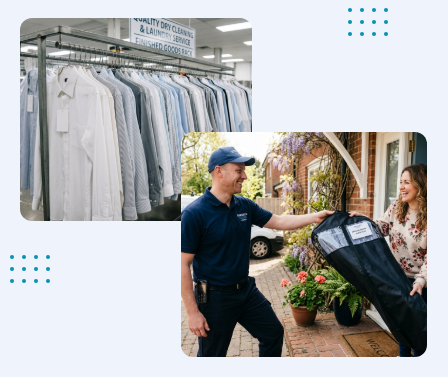
FreshPress Reduced Missed Pickup Rate From 15% to 1.2% and Doubled Customer Base with Upper A Nashville laundry delivery service resolved critical operational inefficiencies by transitioning from Google Maps’ single-phase routing to Upper’s two-phase pickup-and-delivery optimization system, transforming a reliability problem into a competitive advantage. In Conversation with Tanya Brooks, Co-Founder, FreshPress
The Challenge FreshPress had built a loyal customer base in Nashville by offering something simple: reliable laundry pickup and delivery. Customers booked a 2-hour pickup window, set their bag outside their door, and expected it to be picked up within that window. The service was straightforward and the demand was there. But the operational foundation was cracking. The company initially used Google Maps to build routes for pickups and deliveries combined into a single daily run per driver. The logic seemed sound: one route, eight drivers, 120-160 stops per day. But Google Maps treated pickups and deliveries identically, optimizing them as a generic delivery problem. The algorithm created zigzag routes across Nashville rather than geographic clusters. A driver would pick up a load on the east side, drive across town to drop it off, then backtrack to pick up another load from the west side. The routes were inefficient by design. The real cost showed up in missed pickups. Customers booked a specific 2-hour window. Drivers arrived outside that window because the combined route scattered stops across the city with no regard for pickup geography. If a driver was running late—and with inefficient routing, they always were—they’d miss a pickup window entirely. The customer, seeing no driver within their 2-hour window, assumed the driver wasn’t coming. They’d bring their bag inside and cancel the order. Or they’d demand a refund, claiming the service failed. The problems were compounding: 15% missed pickup rate: Drivers arrived outside customer time windows; customers abandoned bags assuming drivers weren’t coming. This triggered either a refund for the service charge, a free pickup credit, or both. Monthly refund costs of $2,400: Every missed pickup generated a customer service complaint and usually a financial concession. Customer cancellations: 40% of customer cancellations cited missed pickups as the primary reason. The service’s core value proposition—reliability—was failing at the most critical moment. No real-time visibility: Customers had no way to know if a driver was actually coming. No ETA. No notification. Just a 2-hour window and hope. Bottleneck in customer service: The operations team spent hours handling refund requests and retention calls instead of growing the business. “Customers book a 2-hour pickup window. If the driver doesn’t show within that window, the bag either gets stolen from the porch or the customer brings it back inside. Either way, we’ve failed. And we’re refunding them for it.” Tanya Brooks Co-Founder, FreshPress The Solution Tanya Brooks recognized the problem was not the drivers or the customers. It was the routing model. Pickup-and-delivery services don’t move goods in a single logical flow. They move goods in two distinct phases: a morning collection phase where drivers visit every customer’s location to pick up dirty laundry, and an afternoon delivery phase where they visit the same customers to drop off clean laundry. Treating these as a single route was fundamentally inefficient. Upper’s two-phase routing capability was the solution she needed. Instead of combined routes, FreshPress could build separate optimized routes: morning pickups clustered geographically, followed by afternoon deliveries from the same geographic zones. Two-Phase Daily Routes The redesign was straightforward in concept but transformative in execution. Each morning, the 8 drivers followed their optimized pickup routes, visiting customers in geographic clusters rather than scattered across Nashville. Once all pickups in a zone were complete, the laundry was returned to the processing facility for cleaning and sorting. In the afternoon, drivers followed the corresponding delivery routes, visiting the same customers in the same geographic zones to drop off clean laundry. This eliminated the backtracking and zigzagging that had defined the old Google Maps approach. A driver’s morning route covered the east side, the west side, or the downtown core, in logical geographic sequence. The afternoon route served the same zone. Drivers finished their routes predictably and on time. The 30-minute daily buffer that Upper’s optimization created per driver was the hidden gift. Instead of racing through 120+ stops on a chaotic route, drivers had time to complete each pickup within the customer’s window, handle exceptions, and still finish by a predictable time. “2 Stops Away” SMS Notification FreshPress paired the optimized routes with Upper’s automated notification system. When a driver was approaching a customer’s location—specifically, when they were 2 stops away—the customer received an SMS notification: “Your FreshPress driver is 2 stops away and will arrive in approximately 15-20 minutes.” The impact was immediate and dramatic. Missed pickups dropped from 15% to 1.2% within a single month. Customers who received the notification knew the driver was actually coming. They didn’t bring their bags inside. They didn’t cancel. The notification solved the problem of uncertainty that had been driving the missed pickup rate. In customer surveys, the “2 stops away” text message became FreshPress’s most valued feature. Customers appreciated the reliability confirmation more than the convenience of the service itself. For a laundry pickup business, that shift in perception was transformative. Photo Proof of Delivery The third component addressed a secondary problem: disputed deliveries. When customers called claiming they never received their laundry, FreshPress had no evidence to reference. The company absorbed the cost of the lost load and issued refunds. Upper’s proof of delivery feature required drivers to take timestamped, GPS-tagged photographs at each stop. These photos showed the clean laundry being delivered to the customer’s door or preferred location, with the date, time, and GPS coordinates embedded in the metadata. Disputed delivery claims dropped by over 90%. Conversations shifted from “we’ll refund you” to “here’s the photo of your delivery.” The photographic evidence protected both FreshPress and customers, eliminating frivolous disputes and fraud. “It sounds obvious in hindsight. Of course pickups and deliveries should be separate routes. You’re not trying to optimize a circular tour of dirty and clean laundry. You’re running two distinct operations in sequence. Upper made us rethink the entire daily flow.” Tanya Brooks Co-Founder, FreshPress The Impact FreshPress’s transformation was measured in metrics and felt in customer loyalty. The missed pickup problem that had threatened the business’s reputation was solved within the first month. The refund costs that had been bleeding the company’s margins were cut by 85%, dropping from $2,400 monthly to under $400. The customer service team that had been drowning in complaints and refund requests could finally focus on growth. The financial impact was substantial. The $2,000+ monthly reduction in refund costs, combined with the elimination of the operational overhead associated with handling complaints, freed up resources. But the bigger impact was psychological and reputational. Customers who once worried about missed pickups started telling their friends about the reliable service. The “2 stops away” notification became word-of-mouth marketing. Within eight months, FreshPress’s active customer base doubled from 800 to over 1,600. Growth was driven entirely by referrals from satisfied customers who had experienced the reliability transformation. The 8-driver fleet that had struggled to handle 800 customers could now comfortably serve 1,600+ without hiring additional drivers. The efficiency gains from two-phase routing, combined with the improved scheduling accuracy, meant the existing team could absorb the growth. For a startup, that kind of efficiency-driven growth is invaluable. Performance Metrics Metric Before Upper After Upper Missed Pickup Rate 15% 1.2% Monthly Refund Costs ~$2,400 Under $400 Active Customers 800 1,600+ Daily Route Buffer None 30 minutes per driver Routing Method Combined (Google Maps) Two-phase optimized Customer Communication None SMS + tracking link Dispute Resolution Success Refund default Photo proof (90%+ resolved) “When we started telling customers their driver was 2 stops away, everything changed. Missed pickups disappeared. The refund requests stopped. And customers started telling their friends about the little text that made laundry pickup actually reliable. We doubled our customer base in eight months without adding a single driver.” Tanya Brooks Co-Founder, FreshPress
The Challenge FreshPress had built a loyal customer base in Nashville by offering something simple: reliable laundry pickup and delivery. Customers booked a 2-hour pickup window, set their bag outside their door, and expected it to be picked up within that window. The service was straightforward and the demand was there. But the operational foundation was cracking. The company initially used Google Maps to build routes for pickups and deliveries combined into a single daily run per driver. The logic seemed sound: one route, eight drivers, 120-160 stops per day. But Google Maps treated pickups and deliveries identically, optimizing them as a generic delivery problem. The algorithm created zigzag routes across Nashville rather than geographic clusters. A driver would pick up a load on the east side, drive across town to drop it off, then backtrack to pick up another load from the west side. The routes were inefficient by design. The real cost showed up in missed pickups. Customers booked a specific 2-hour window. Drivers arrived outside that window because the combined route scattered stops across the city with no regard for pickup geography. If a driver was running late—and with inefficient routing, they always were—they’d miss a pickup window entirely. The customer, seeing no driver within their 2-hour window, assumed the driver wasn’t coming. They’d bring their bag inside and cancel the order. Or they’d demand a refund, claiming the service failed. The problems were compounding: 15% missed pickup rate: Drivers arrived outside customer time windows; customers abandoned bags assuming drivers weren’t coming. This triggered either a refund for the service charge, a free pickup credit, or both. Monthly refund costs of $2,400: Every missed pickup generated a customer service complaint and usually a financial concession. Customer cancellations: 40% of customer cancellations cited missed pickups as the primary reason. The service’s core value proposition—reliability—was failing at the most critical moment. No real-time visibility: Customers had no way to know if a driver was actually coming. No ETA. No notification. Just a 2-hour window and hope. Bottleneck in customer service: The operations team spent hours handling refund requests and retention calls instead of growing the business.
“Customers book a 2-hour pickup window. If the driver doesn’t show within that window, the bag either gets stolen from the porch or the customer brings it back inside. Either way, we’ve failed. And we’re refunding them for it.” Tanya Brooks Co-Founder, FreshPress
The Solution Tanya Brooks recognized the problem was not the drivers or the customers. It was the routing model. Pickup-and-delivery services don’t move goods in a single logical flow. They move goods in two distinct phases: a morning collection phase where drivers visit every customer’s location to pick up dirty laundry, and an afternoon delivery phase where they visit the same customers to drop off clean laundry. Treating these as a single route was fundamentally inefficient. Upper’s two-phase routing capability was the solution she needed. Instead of combined routes, FreshPress could build separate optimized routes: morning pickups clustered geographically, followed by afternoon deliveries from the same geographic zones. Two-Phase Daily Routes The redesign was straightforward in concept but transformative in execution. Each morning, the 8 drivers followed their optimized pickup routes, visiting customers in geographic clusters rather than scattered across Nashville. Once all pickups in a zone were complete, the laundry was returned to the processing facility for cleaning and sorting. In the afternoon, drivers followed the corresponding delivery routes, visiting the same customers in the same geographic zones to drop off clean laundry. This eliminated the backtracking and zigzagging that had defined the old Google Maps approach. A driver’s morning route covered the east side, the west side, or the downtown core, in logical geographic sequence. The afternoon route served the same zone. Drivers finished their routes predictably and on time. The 30-minute daily buffer that Upper’s optimization created per driver was the hidden gift. Instead of racing through 120+ stops on a chaotic route, drivers had time to complete each pickup within the customer’s window, handle exceptions, and still finish by a predictable time. “2 Stops Away” SMS Notification FreshPress paired the optimized routes with Upper’s automated notification system. When a driver was approaching a customer’s location—specifically, when they were 2 stops away—the customer received an SMS notification: “Your FreshPress driver is 2 stops away and will arrive in approximately 15-20 minutes.” The impact was immediate and dramatic. Missed pickups dropped from 15% to 1.2% within a single month. Customers who received the notification knew the driver was actually coming. They didn’t bring their bags inside. They didn’t cancel. The notification solved the problem of uncertainty that had been driving the missed pickup rate. In customer surveys, the “2 stops away” text message became FreshPress’s most valued feature. Customers appreciated the reliability confirmation more than the convenience of the service itself. For a laundry pickup business, that shift in perception was transformative. Photo Proof of Delivery The third component addressed a secondary problem: disputed deliveries. When customers called claiming they never received their laundry, FreshPress had no evidence to reference. The company absorbed the cost of the lost load and issued refunds. Upper’s proof of delivery feature required drivers to take timestamped, GPS-tagged photographs at each stop. These photos showed the clean laundry being delivered to the customer’s door or preferred location, with the date, time, and GPS coordinates embedded in the metadata. Disputed delivery claims dropped by over 90%. Conversations shifted from “we’ll refund you” to “here’s the photo of your delivery.” The photographic evidence protected both FreshPress and customers, eliminating frivolous disputes and fraud.
“It sounds obvious in hindsight. Of course pickups and deliveries should be separate routes. You’re not trying to optimize a circular tour of dirty and clean laundry. You’re running two distinct operations in sequence. Upper made us rethink the entire daily flow.” Tanya Brooks Co-Founder, FreshPress
The Impact FreshPress’s transformation was measured in metrics and felt in customer loyalty. The missed pickup problem that had threatened the business’s reputation was solved within the first month. The refund costs that had been bleeding the company’s margins were cut by 85%, dropping from $2,400 monthly to under $400. The customer service team that had been drowning in complaints and refund requests could finally focus on growth. The financial impact was substantial. The $2,000+ monthly reduction in refund costs, combined with the elimination of the operational overhead associated with handling complaints, freed up resources. But the bigger impact was psychological and reputational. Customers who once worried about missed pickups started telling their friends about the reliable service. The “2 stops away” notification became word-of-mouth marketing. Within eight months, FreshPress’s active customer base doubled from 800 to over 1,600. Growth was driven entirely by referrals from satisfied customers who had experienced the reliability transformation. The 8-driver fleet that had struggled to handle 800 customers could now comfortably serve 1,600+ without hiring additional drivers. The efficiency gains from two-phase routing, combined with the improved scheduling accuracy, meant the existing team could absorb the growth. For a startup, that kind of efficiency-driven growth is invaluable. Performance Metrics Metric Before Upper After Upper Missed Pickup Rate 15% 1.2% Monthly Refund Costs ~$2,400 Under $400 Active Customers 800 1,600+ Daily Route Buffer None 30 minutes per driver Routing Method Combined (Google Maps) Two-phase optimized Customer Communication None SMS + tracking link Dispute Resolution Success Refund default Photo proof (90%+ resolved)
“When we started telling customers their driver was 2 stops away, everything changed. Missed pickups disappeared. The refund requests stopped. And customers started telling their friends about the little text that made laundry pickup actually reliable. We doubled our customer base in eight months without adding a single driver.” Tanya Brooks Co-Founder, FreshPress