

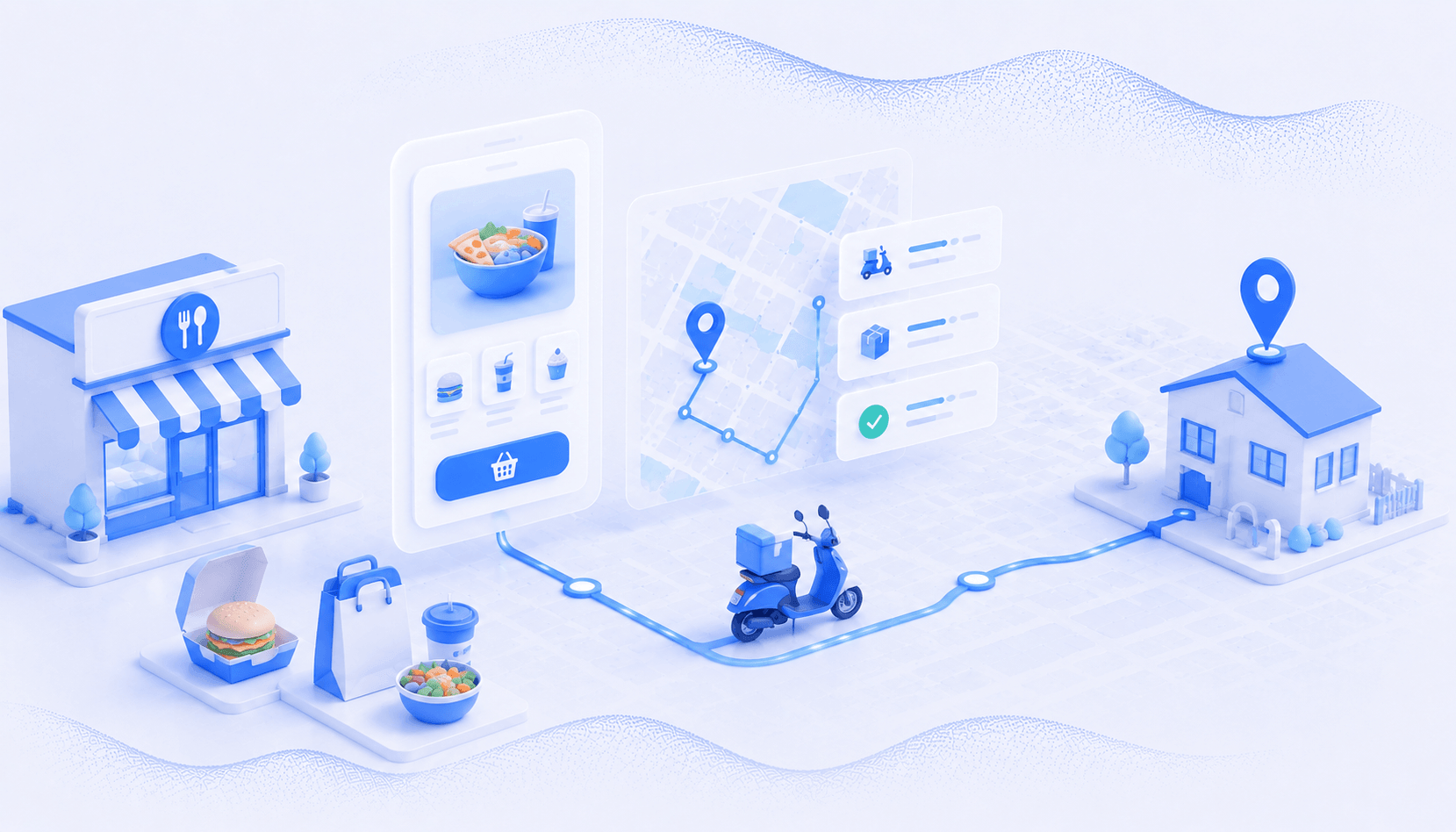
Food and beverage distribution is the process of moving products from manufacturers and warehouses to grocery stores, restaurants, retailers, and other customers. The goal is simple: deliver fresh products on time while maintaining quality and food safety.
The challenge is that food distribution is anything but simple. Unlike general freight, every delivery must meet strict time windows, temperature requirements, and compliance standards. Even small delays can lead to spoiled inventory, rejected deliveries, and higher operating costs.
As demand for faster deliveries grows, so does the market. According to TrendFeedr, the global food and beverage distribution market is valued at USD 544 billion in 2025 and is projected to reach USD 681 billion by 2029.
Yet many distributors still lose 5-15% of revenue to spoilage, failed deliveries, and inefficient routes because of manual planning.
This guide explains how food and beverage distribution works, the different distribution models businesses use, the biggest operational challenges, and practical strategies to improve delivery efficiency while reducing costs.
Table of Contents
- What Is Food and Beverage Distribution?
- How Does Optimized Distribution Reduce Costs for Food and Beverage Businesses?
- How to Build an Efficient Food and Beverage Distribution Operation
- What Are the Biggest Challenges in Food and Beverage Distribution?
- Best Practices for Food and Beverage Distribution Success
- What Technology Do Food and Beverage Distributors Need?
- Streamline Your Food and Beverage Distribution With Upper
- Frequently Asked Questions
What Is Food and Beverage Distribution?
Food and beverage distribution refers to the segment of the supply chain responsible for moving finished products from production facilities or central warehouses to the businesses and consumers who purchase them.
Unlike general goods distribution, it requires constant attention to product shelf life, temperature control, and food safety regulations at every stage of the process.
For example, a regional beverage distributor delivering to 80 restaurants and retail stores daily must coordinate cold storage at the warehouse, temperature-controlled loading sequences, time-sensitive delivery windows (most restaurants require delivery before the lunch rush), and documented proof that products arrived in proper condition. A single breakdown at any stage can mean spoiled inventory, lost accounts, and compliance violations.
How Food and Beverage Distribution Works
The distribution process follows a consistent flow from warehouse to customer. It starts with sourcing and procurement, where products arrive from manufacturers, processors, or farms and enter the distributor’s inventory.
From there, products move into warehousing, where they are stored in temperature-appropriate zones (cold, frozen, ambient) with FIFO/FEFO rotation to minimize spoilage.
When customer orders come in, the order processing stage consolidates, picks, and stages items for delivery. Route planning follows, designing delivery routes around time windows, vehicle capacity, and product constraints. Trucks are then loaded in reverse delivery order so the first stop’s products are most accessible.
During delivery execution, drivers follow optimized routes, capture proof of delivery, and note any exceptions. Finally, returns and credits processing handles refused, damaged, or short-shipped items back through the system.
Temperature control and time sensitivity touch every stage. A delay at the warehouse ripples through loading, pushes back delivery times, and can compromise product quality before the driver reaches the first stop.
What Is the Difference Between Food Distribution and Food Logistics?
These terms are often used interchangeably, but they refer to different scopes of operation.
Food distribution is the delivery leg: getting products from the warehouse to the customer. It focuses on route planning, vehicle loading, driver dispatch, delivery execution, and proof of delivery.
Food logistics is the broader supply chain: sourcing, procurement, warehousing, inventory management, distribution, and reverse logistics (returns and recalls). Distribution is one component within the larger logistics operation.
| Dimension | Food Distribution | Food Logistics |
|---|---|---|
| Scope | Warehouse to customer | End-to-end supply chain |
| Core Activities | Routing, loading, delivery, POD | Sourcing, warehousing, distribution, returns |
| Technology Focus | Route optimization, dispatch, tracking | ERP, WMS, TMS, distribution software |
This distinction matters for technology decisions. A distributor focused on improving delivery efficiency needs route optimization and delivery management software. A company trying to overhaul its entire supply chain needs broader logistics technology, often starting with ERP and warehouse management systems.
Types of Food and Beverage Distribution Models
Food and beverage distributors typically operate under one of four models, each with different routing complexity and technology requirements.
Direct Store Delivery (DSD)
Direct Store Delivery (DSD) is when the manufacturer or distributor delivers products directly to retail locations, bypassing distribution centers. It is common for beverages, snacks, and bread. DSD gives distributors more control over product placement and freshness but requires complex multi-stop routing across a large number of accounts.
Warehouse Distribution
Warehouse distribution uses a centralized warehouse that receives products from multiple suppliers and ships to customers. The distributor controls inventory, picking, and delivery. This is the most common model for mid-size food distributors.
Broadline Distribution
Broadline distribution serves restaurants and foodservice operations with thousands of SKUs across categories. Sysco and US Foods are the largest examples. It requires sophisticated inventory management and high-volume routing.
Specialty/Niche Distribution
Specialty/niche distribution focuses on a single category like organic produce, ethnic foods, craft beverages, or frozen desserts. These operations have smaller delivery volumes but specialized handling requirements.
| Model | Typical Fleet Size | Delivery Frequency | Routing Complexity | Best For |
|---|---|---|---|---|
| DSD | 10-100+ trucks | Daily | High (many stops, tight windows) | Beverages, snacks, bakery |
| Warehouse | 5-50 trucks | Daily to weekly | Moderate | Regional food distributors |
| Broadline | 50-500+ trucks | Daily | Very high (thousands of SKUs) | Foodservice, restaurant supply |
| Specialty | 3-20 trucks | 2-3x per week | Low to moderate | Niche categories, local markets |
Regardless of which model a distributor operates under, the core operational challenge is the same: moving perishable products to the right locations within the right time windows while keeping costs under control and maintaining compliance. The difference lies in the scale and the constraints.
How Does Optimized Distribution Reduce Costs for Food and Beverage Businesses?
Food and beverage margins are thin. Net profit for many distributors runs between 1% and 3%. At those margins, distribution efficiency is not a nice-to-have. It directly determines whether a distributor is profitable or bleeding money on every route.
Here are six measurable ways optimized distribution reduces costs and improves performance for food and beverage businesses.
1. Reduces Spoilage and Product Waste Through Tighter Delivery Windows
Optimized routes minimize the time products spend in transit between the warehouse and the delivery point. Time-window routing ensures temperature-sensitive items arrive within safe handling periods, reducing exposure to conditions that accelerate spoilage.
Distributors who optimize delivery sequences report 10-20% reduction in spoilage rates, directly reclaiming revenue that would otherwise be written off as waste.
2. Cuts Fuel and Transportation Costs With Efficient Routing
Fuel is the second-largest expense for food distributors after labor, typically accounting for 25-35% of operating costs.
Route optimization reduces total miles driven by 15-30% by eliminating backtracking, unnecessary cross-town trips, and inefficient stop sequencing. Combined with capacity-aware load planning, fewer trips are needed per day because each vehicle carries a fuller, better-organized load.
3. Increases Delivery Capacity Without Adding Vehicles
Optimized stop sequencing and load planning let existing trucks handle more drops per route. Distributors typically gain 15-25% more stops per driver daily with last-mile delivery optimization.
Scaling delivery volume without scaling fleet size protects margins, and it is often the difference between hiring two more drivers and getting more out of the team you already have.
4. Improves Customer Satisfaction With Reliable, On-Time Deliveries
Restaurants and retailers depend on predictable delivery windows for prep and stocking. A late delivery to a restaurant means the kitchen is not ready for the lunch rush.
Automated customer notifications keep receiving teams informed about ETAs without requiring dispatchers to make phone calls, reducing inbound “where’s my order” calls by 40-60%.
5. Strengthens Compliance With Food Safety Regulations
FSMA, FDA, and state health regulations require documented chain of custody for food products.
Digital proof of delivery with timestamps and geotags creates audit-ready records automatically, replacing paper-based documentation that is slow, error-prone, and difficult to retrieve during inspections. Temperature logging and delivery documentation reduce compliance risk without adding administrative burden.
6. Enables Data-Driven Decision Making Across Operations
Route analytics reveal cost-per-delivery, driver efficiency, and territory profitability at a granular level. Historical delivery data supports demand forecasting and seasonal capacity planning, so distributors can prepare for holiday peaks and summer beverage surges before they hit.
Performance metrics identify underperforming routes and drivers, enabling targeted improvements rather than across-the-board guesswork.
The table below shows how optimization impacts food distribution performance across key operational metrics.
| Metric | Manual Planning | Basic Route Planning | Optimized Distribution |
|---|---|---|---|
| Planning time per day | 2-4 hours | 30-60 minutes | Under 5 minutes |
| Miles per stop | 4-7 miles | 3-5 miles | 2-3 miles |
| On-time delivery rate | 70-80% | 80-88% | 92-98% |
| Fuel cost per delivery | $8-15 | $5-10 | $3-7 |
| Spoilage rate | 8-15% | 5-10% | 2-5% |
| Stops per driver daily | 15-25 | 25-35 | 35-50 |
Note: Ranges reflect urban/suburban food distribution operations, 10-30 drivers. Results vary by geography, product mix, and operational maturity.
To put the financial impact in perspective, here is how the typical food distribution cost structure breaks down, along with where route optimization reduces each category.
| Cost Category | % of Operating Costs | Route Optimization Impact |
|---|---|---|
| Labor | 40-50% | Reduces overtime through efficient scheduling |
| Fuel/transportation | 25-35% | Cuts 25-40% through shorter, optimized routes |
| Warehousing | 10-15% | Improves loading speed through route-sequenced staging |
| Spoilage/waste | 5-10% | Reduces 10-20% through tighter delivery windows |
| Compliance/admin | 3-5% | Automates documentation with digital POD |
Understanding why optimization matters is the first step. The next question is how to build a distribution operation that captures these benefits from day one.

See it in action
Increase Stops Per Driver by 15-25% With Optimized Routes
Upper reduces miles driven and fits more deliveries into every shift without adding vehicles to your operation.
How to Build an Efficient Food and Beverage Distribution Operation
Building an efficient food and beverage distribution operation requires getting six interconnected pieces right: warehouse organization, route design, load planning, delivery execution, proof of delivery, and performance tracking.
Skip any one, and inefficiencies compound across the entire chain. Here is a step-by-step framework that covers each stage from the warehouse dock to the post-delivery review.
Step 1: Organize Your Warehouse for Distribution Speed
1.1 Implement Zone-Based Storage for Temperature Categories
Separate cold, frozen, and ambient zones with clear picking paths between them. Within each zone, organize products by delivery frequency: fast-moving SKUs closest to the loading dock, slower-moving items further back.
This reduces picker travel time and keeps the loading dock flowing during the morning rush. Consistent zone layouts also reduce picking errors, which show up as short shipments or wrong products at the customer’s door.
1.2 Use FIFO and FEFO Inventory Rotation
Apply First-In-First-Out (FIFO) for shelf-stable products and First-Expired-First-Out (FEFO) for perishables. FEFO is critical for dairy, fresh produce, and prepared foods where expiration dates vary across the same SKU.
Label and track lot numbers for traceability. If a recall hits, you need to know exactly which lots went to which customers, and strong food warehousing practices make that traceback a data lookup instead of a warehouse-wide search.
Step 2: Design Routes Around Delivery Windows and Product Constraints
2.1 Map Customer Time Windows and Receiving Schedules
Restaurants need deliveries before service starts, often between 6 a.m. and 10 a.m. Retail stores may restrict deliveries to specific hours to avoid blocking customer aisles. Group stops by time window compatibility to reduce wait time.
A route that clusters morning-window stops together avoids the inefficiency of zigzagging between early and late windows across the same territory.
2.2 Factor in Temperature Sensitivity and Load Sequence
Frozen products should be loaded last and delivered first to minimize thaw exposure. Route sequencing should account for which products can share truck compartments and which require separation.
Build buffer time for temperature checks at delivery, especially for customers who require documented temperature readings before accepting product. Cold chain logistics breaks down when route design treats frozen and ambient products identically.
Step 3: Optimize Vehicle Loading for Capacity and Delivery Order
3.1 Plan Loads Based on Stop Sequence
Load in reverse delivery order so the first stop’s products are most accessible and the last stop’s products are deepest in the truck. Account for weight distribution and vehicle capacity limits.
Poor load planning forces drivers to dig through pallets at every stop, adding 5-10 minutes per delivery and creating opportunities for product damage.
3.2 Use Capacity-Aware Route Planning
Factor in pallet dimensions, case counts, and weight per stop when building routes. Avoid overloading for both safety and compliance reasons while maximizing truck utilization.
When order volume exceeds single-truck capacity, truck load optimization balances loads across multiple vehicles so each truck runs at optimal capacity without overloading.
Step 4: Execute Deliveries With Real-Time Tracking and Communication
4.1 Track Drivers and Route Progress in Real Time
GPS tracking gives dispatchers live visibility into every delivery. When a driver runs behind schedule, dispatch can see it immediately and either reroute or notify affected customers proactively.
Without live tracking, dispatch does not know about a delay until the customer calls to complain, and by then the problem has already cascaded across the remaining route.
4.2 Automate Customer Notifications
Automated ETA updates notify receiving teams so they are ready at the dock when the driver arrives. Delivery confirmation messages eliminate the stream of “where’s my order” calls that tie up both dispatchers and drivers.
Automated customer notifications handle this end-to-end, keeping customers informed without requiring a single manual status update from the driver.
Step 5: Capture Proof of Delivery for Every Stop
5.1 Document Deliveries Digitally
Drivers capture photos, signatures, and delivery notes at each stop through a mobile app. Every delivery gets a timestamp and geotag for compliance records.
Exceptions like short shipments, damaged products, or refused items are flagged immediately so dispatch and billing can act on them the same day instead of discovering them a week later during reconciliation.
5.2 Use Delivery Data to Resolve Disputes Quickly
Digital proof of delivery eliminates he-said-she-said disputes on delivery claims. When a customer says they never received a product, searchable records with photos and signatures resolve it in seconds instead of days.
This speeds up credit and return processing, reduces billing disputes by 70-85%, and strengthens customer trust over time.
Step 6: Analyze Performance and Continuously Improve
6.1 Track Key Distribution Metrics
Monitor these metrics daily or weekly: cost per delivery, on-time delivery rate, stops completed per driver, miles per stop, spoilage rate by route and product category, and customer complaint frequency by territory.
A 10-driver operation tracking these numbers weekly can identify $2,000-5,000 in monthly savings within the first 90 days just by addressing the worst-performing routes.
6.2 Use Data to Refine Routes and Territories
Identify underperforming routes and rebalance territories based on actual delivery data, not assumptions. Adjust driver assignments based on performance and familiarity with specific areas.
Seasonal demand patterns should drive capacity planning so holiday peaks and summer beverage surges do not catch your operation off guard.
Food and beverage distribution demand shifts significantly across the year, and the distributors who plan ahead avoid the scramble.
| Season | Demand Driver | Capacity Impact | Planning Action |
|---|---|---|---|
| Q1 (Jan-Mar) | Post-holiday slowdown, health food surge | Lower volume, rebalance territories | Optimize routes for smaller stop counts |
| Q2 (Apr-Jun) | Catering season ramp-up, outdoor events | Moderate increase | Add capacity for weekend/event routes |
| Q3 (Jul-Sep) | Summer beverage peak, BBQ/grilling season | 20-40% volume increase for beverages | Pre-plan extra routes, stage beverage inventory |
| Q4 (Oct-Dec) | Holiday peak, corporate catering, gift baskets | Highest volume, 30-50% increase | Hire seasonal drivers, extend delivery windows |
A distribution operation built on these six steps handles the complexity of food and beverage logistics without depending on tribal knowledge or manual workarounds. But even well-designed operations face recurring challenges that require targeted solutions.
See it in action
Plan Optimized Food Distribution Routes in Minutes
Upload your stops, set time windows and capacity constraints, and get optimized routes for your entire driver team automatically.
What Are the Biggest Challenges in Food and Beverage Distribution?
Even well-run food and beverage distribution operations hit recurring friction points. These are not one-time problems. They are structural realities of distributing perishable products under tight time and regulatory constraints.
Knowing where breakdowns typically happen is the first step to preventing them.
Challenge #1: Managing Tight Delivery Windows for Perishable Products
The Problem
Restaurants need deliveries before service hours. Retail stores need them during stocking windows. A single late delivery cascades into delays across the remaining route because every subsequent stop gets pushed back.
Manual scheduling cannot account for traffic, loading delays, and customer variability simultaneously, and the margin for error shrinks when products have a limited shelf life.
How to Fix This
Use time-window-aware route optimization that sequences stops by constraint priority. Build buffer time into routes for high-variability stops where unloading takes longer or receiving is unpredictable.
Automated notifications alert customers to adjusted ETAs before the driver arrives late, turning a potential complaint into a proactive update.
Challenge #2: Controlling Spoilage Across the Distribution Chain
The Problem
Temperature excursions during loading, transit, and unloading cause product loss. Poor inventory rotation, specifically FIFO/FEFO violations at the warehouse, leads to expired products reaching customers.
Spoilage is often discovered after delivery, creating returns, credit disputes, and damaged customer relationships. The USDA estimates that 30-40% of the U.S. food supply is wasted, and a significant portion of that waste occurs at the distribution and retail level.
How to Fix This
Sequence routes to minimize time between the warehouse and delivery for temperature-sensitive items. Implement digital proof of delivery with photo documentation of product condition at handoff so there is a record of how the product looked when it left the truck.
Track spoilage metrics by route, driver, and product to identify patterns that point to specific operational breakdowns rather than treating all spoilage as unavoidable.
Challenge #3: Balancing Route Efficiency With Customer Service Requirements
The Problem
High-value accounts demand priority delivery windows that often conflict with route efficiency. Last-minute order changes disrupt optimized sequences. Drivers spend time on non-delivery tasks like returns processing and credit approvals that extend routes and push subsequent stops behind schedule.
The result is a constant tension between keeping key accounts happy and keeping costs under control.
How to Fix This
Use priority-based routing that gives key accounts preferred time windows without destroying overall route efficiency. Dynamic route adjustment capabilities handle day-of changes without requiring dispatchers to rebuild entire routes.
Standardize non-delivery tasks with mobile workflows to minimize time per stop. When same-day orders come in, the system should be able to slot them into the existing route sequence intelligently, not require a complete re-plan.
Challenge #4: Meeting Regulatory Compliance Without Slowing Operations
The Problem
FSMA and FDA regulations require documented chain of custody for food products moving through the supply chain. State-level health regulations add additional tracking and documentation requirements.
Manual compliance documentation is slow, error-prone, and creates audit vulnerability. When an inspector asks for delivery records from six months ago, paper-based systems turn a simple request into a half-day search.
How to Fix This
Digital proof of delivery automatically creates timestamped, geotagged delivery records for every stop. Barcode scanning verifies correct products at each stop and builds an automated audit trail. Centralized delivery records make compliance audits a data export, not a paper chase.
Here is a quick reference for the FSMA compliance requirements that apply to food distribution operations:
- Temperature monitoring and logging during transit
- Documented chain of custody from warehouse to delivery point
- Lot number traceability for all distributed products
- Compliance with the Sanitary Transportation of Human and Animal Food rule
- Supplier verification and approved supplier documentation
- Delivery recordkeeping accessible for a minimum of two years
- Vehicle sanitation and maintenance documentation
- Corrective action records for any temperature excursion or handling violation
These challenges are not going away. The question is whether you address them with manual workarounds that break under pressure or with systematic processes backed by the right technology. The next section covers the best practices that top-performing distributors follow.
See it in action
Solve Perishable Delivery Challenges With Smart Route Optimization
Upper sequences stops to minimize transit time for temperature-sensitive products and automates proof of delivery documentation for every stop.
Best Practices for Food and Beverage Distribution Success
The distributors that consistently hit 95%+ on-time rates while keeping costs low share common operational habits.
These six best practices are drawn from how high-performing food and beverage distributors structure their daily operations.
1. Plan Routes the Day Before, Not the Morning Of
Morning-of planning creates chaos and delays driver departure. Dispatchers scramble to build routes, drivers wait around, and the first stops are already behind schedule before anyone leaves the lot.
Pre-planned, optimized routes let drivers review their stops the night before, plan their loading order, and start their day with zero confusion. Dispatchers review and adjust rather than build from scratch, cutting morning planning from 2-3 hours to under 15 minutes.
2. Group Stops by Temperature Zone and Product Compatibility
Co-loading incompatible products creates compliance risk and product quality issues. Route grouping by temperature zone reduces compartment transitions and maintains cold chain integrity throughout the delivery.
It also reduces loading complexity and errors at the warehouse because pickers can stage orders by route and temperature zone rather than mixing everything together.
3. Automate Customer Communication Instead of Relying on Drivers
Drivers calling ahead wastes 3-5 minutes per stop and creates safety risks on the road. Automated delivery status notifications keep receiving teams ready without manual effort. Delivery confirmation messages reduce inbound “where’s my order” calls by 40-60%.
The result is a more professional delivery experience, fewer interruptions to the driver’s route, and a dispatch team that handles exceptions instead of status updates.
4. Capture Digital Proof of Delivery at Every Stop
Paper-based delivery records get lost, damaged, and disputed. Digital proof of delivery apps with photos, signatures, and timestamps are searchable and audit-ready from the moment the driver completes the stop.
It reduces delivery disputes by 70-85%, speeds up billing cycles by an average of 3-5 days, and creates the compliance documentation required by FSMA and FDA regulations without any extra administrative work.
5. Review Route Performance Weekly, Not Quarterly
Weekly reviews catch emerging inefficiencies before they become entrenched habits. Track cost per delivery, miles per stop, and on-time rate by driver and territory. Use data to rebalance territories and adjust driver assignments.
Quarterly reviews are too infrequent for an operation where conditions change weekly based on order volume, customer changes, and seasonal demand shifts.
6. Invest in Route Optimization Software, Not Just GPS
GPS navigation finds the fastest path between two points. Route optimization determines the best sequence for all stops across constraints including time windows, capacity, and priority. The difference: GPS saves minutes per trip, while route optimization saves hours per operation per day.
Delivery route scheduling takes this further by letting distributors plan routes days or weeks in advance for recurring accounts.
When route optimization may not be the right first investment: Route optimization delivers the most value when a distributor has 10+ daily routes, an established customer base, and consistent order volumes.
For very small operations with 1-3 trucks making fewer than 20 stops daily, starting with Upper’s free route planner (up to 20 stops, no account needed) or basic route planning may be sufficient.
As stop counts grow and time windows tighten, the ROI of optimization software becomes clear within the first week.
These best practices work because they address the structural realities of food and beverage distribution: perishable products, demanding customers, and thin margins. The technology that makes these practices scalable is the final piece.
See it in action
Automate Dispatch and Track Every Delivery in Real Time
Replace morning planning chaos with pre-optimized routes, one-click dispatch, and live GPS tracking across your distribution operation.
What Technology Do Food and Beverage Distributors Need?
Technology alone does not fix distribution problems. But the right technology stack turns the best practices above from aspirational guidelines into daily operational reality. Here is what modern food and beverage distributors are using across their operations.
1. Route Optimization and Delivery Management Software
This is the operational backbone of the distribution operation. It plans routes, dispatches drivers, tracks deliveries, and captures proof of delivery in a single platform. For food distribution, the software must handle food-specific constraints: time windows, capacity limits, temperature zones, and priority accounts.
It replaces spreadsheet-based planning and manual dispatch with automated workflows that generate optimized routes in under a minute for the entire driver team. Integration with existing systems like ERP, inventory management, and order processing is critical for avoiding double data entry.
Upper handles all of these functions in one platform, from route planning through delivery confirmation.
2. Warehouse Management Systems (WMS)
A WMS manages inventory, picking sequences, and loading operations at the warehouse level. FIFO/FEFO enforcement prevents spoilage before products ever leave the dock, which is especially important for distributors handling 500+ SKUs across multiple temperature zones.
Integration with route planning ensures that loading sequences match delivery order, so the first stop’s products are loaded last and accessible first.
3. Fleet Telematics and GPS Tracking
Real-time vehicle location and route progress monitoring give dispatchers visibility into field operations throughout the day. Driver behavior data covering speeding, idling, and harsh braking supports safety programs and cost control.
Telematics complements route optimization by providing the visibility layer that confirms whether planned routes are being followed and where deviations occur.
4. Customer Communication and Notification Platforms
Automated ETA messages, delivery confirmations, and exception alerts keep customers informed without manual effort from dispatchers or drivers. These notifications reduce inbound support volume by 40-60% and improve customer satisfaction scores.
The best approach is integration directly into the delivery management platform to avoid tool sprawl and ensure notifications are triggered by actual route events, not manual actions.
5. Compliance and Food Safety Documentation Tools
Digital chain-of-custody records satisfy FSMA and FDA compliance requirements automatically. Temperature monitoring and logging during transit documents that products maintained safe temperatures throughout delivery.
Proof of delivery with timestamps and geotags creates audit-ready records that are accessible instantly, replacing the filing cabinets and paper trails that slow down inspections and increase compliance risk.
6. Analytics and Business Intelligence
Route performance dashboards, cost-per-delivery tracking, and driver scorecards turn raw delivery data into actionable insights that drive weekly improvements. Demand forecasting based on historical delivery patterns and seasonal trends helps distributors plan capacity before surges hit.
Territory optimization based on actual delivery data, rather than assumptions or outdated zone maps, ensures routes are designed around where customers actually are today.
The most impactful technology investment for food and beverage distributors is the one that touches every delivery, every day: route optimization and delivery management. Everything else supports it.
See it in action
Route Optimization, Dispatch, Tracking, and POD in One Platform
Upper handles the full delivery workflow for food distributors. No tool sprawl, no manual handoffs between systems.
Streamline Your Food and Beverage Distribution With Upper
Efficient food and beverage distribution depends on getting route planning, capacity optimization, delivery execution, and compliance documentation right. The distributors who systematize these steps consistently outperform those relying on manual processes and disconnected tools.
Upper Route Planner handles the operational core of food and beverage distribution: route optimization with time-window constraints, capacity-aware load planning, real-time GPS tracking, automated customer notifications, and digital proof of delivery with photos and signatures.
For distributors managing perishable products across tight delivery windows, Upper sequences stops to minimize transit time and maximize truck utilization across every route.
Whether you are running a 5-truck DSD operation or a 50-vehicle broadline distribution fleet, Upper scales with your delivery volume. Upload your stop list from a spreadsheet, set your time windows and capacity constraints, and get optimized routes for your entire team in minutes.
Book a demo to see how Upper can optimize your food and beverage distribution routes.
Frequently Asked Questions
The food and beverage supply chain flows from raw material sourcing through processing, manufacturing, warehousing, distribution, and final delivery to retail or foodservice locations.
Distribution is the link between the warehouse and the customer, and it typically involves route planning, vehicle loading, driver dispatch, delivery execution, and return/credit processing.
The biggest challenges include managing tight delivery windows for perishable products, controlling spoilage across the distribution chain, balancing route efficiency with customer service demands, and meeting FDA and FSMA compliance requirements.
Each of these challenges compounds when distributors rely on manual planning and paper-based documentation.
Route optimization software analyzes delivery constraints like time windows, capacity limits, stop priority, and traffic patterns, then calculates the most efficient stop sequence for each driver.
Food distributors using route optimization typically reduce fuel costs by 25-40% and increase stops per driver by 15-25%, directly lowering cost per delivery.
At minimum, food and beverage distributors need route optimization and delivery management software, a warehouse management system, GPS tracking, and compliance documentation tools.
The most impactful investment is route optimization software that handles time windows, capacity constraints, and multi-driver dispatch, since it touches every delivery every day.
Food distributors maintain compliance by documenting the chain of custody for every product, from warehouse to delivery. Digital proof of delivery with timestamps, geotags, photos, and signatures creates audit-ready records automatically.
Barcode scanning at pickup and delivery verifies correct products reach the right locations, and route optimization helps maintain temperature integrity by minimizing transit time.
Key daily metrics include cost per delivery, on-time delivery rate, stops completed per driver, miles per stop, and spoilage rate by route. Weekly tracking should add territory profitability, driver performance comparisons, and customer complaint frequency.
Setting benchmarks for each metric and reviewing trends weekly catches emerging inefficiencies before they become entrenched.
Route optimization and delivery management software typically costs $30-70 per driver per month, depending on features and fleet size. Warehouse management systems and telematics add additional costs.
The ROI typically justifies the investment within weeks: a 10-driver operation saving 2 hours of planning time daily and reducing fuel costs by 25% recovers software costs many times over.
Yes. Small food distributors with 5-10 trucks often see the biggest relative impact from route optimization because every inefficient route has an outsized effect on costs and delivery capacity.
Upper offers a free route planner for up to 20 stops at no cost, so smaller operations can start optimizing immediately and scale to full delivery management as volume grows.
A food distributor delivers products directly to retail locations, restaurants, or end consumers, managing the transportation and delivery logistics. A food wholesaler sells products in bulk from a warehouse, and buyers typically arrange their own pickup or shipping.
Many businesses operate as both, but the distribution function adds routing, delivery, and compliance complexity that wholesaling alone does not require.
Cold chain integrity during delivery depends on three factors: proper vehicle temperature control, optimized route sequencing that minimizes transit time for temperature-sensitive products, and documented proof of delivery with condition notes at handoff.
Loading frozen products last (so they are delivered first) and building buffer time for temperature checks at each stop are standard practices.
Food distributors typically need FDA registration, FSMA compliance documentation, state-level health department permits, and DOT compliance for commercial vehicles.
HACCP (Hazard Analysis Critical Control Points) awareness is required for distributors handling high-risk products. Some retail chains also require third-party food safety certifications like SQF or BRCGS as a condition of doing business.