

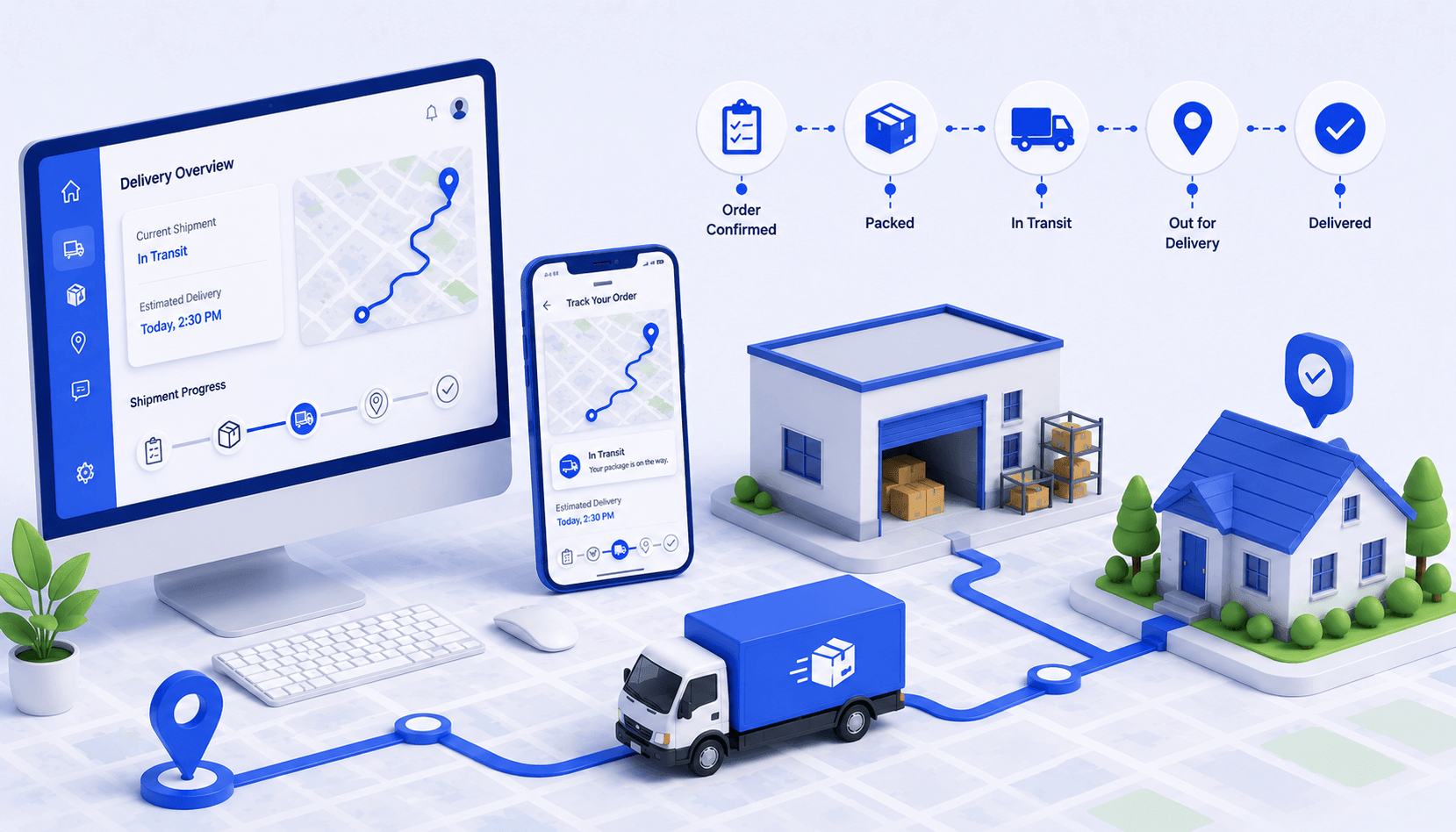






A delivery exception occurs when a scheduled delivery cannot be completed as planned due to address issues, recipient unavailability, access restrictions, or operational disruptions.
Most exceptions are preventable, and reducing your exception rate directly cuts redelivery costs and protects customer satisfaction. For businesses running their own delivery operations, every exception is a failed stop that wastes driver time and increases cost per delivery.
According to a 2023 Statista report, last-mile delivery accounts for 53% of total shipping costs, and failed deliveries are one of the biggest contributors to that expense. Industry benchmarks suggest that 8-12% of all last-mile deliveries result in a failed first attempt, with each exception costing $10-$20 in direct redelivery expenses alone.
The problem compounds quickly. A single delivery exception triggers a redelivery attempt, a customer service interaction, and potential lost business. At scale, even a 5-10% exception rate across 200 daily deliveries creates thousands in monthly waste.
This guide breaks down what delivery exceptions are, what causes them, how they impact your operations, and a step-by-step framework to prevent and handle them effectively.
Table of Contents
- What Is a Delivery Exception?
- What Causes Delivery Exceptions?
- How Do Delivery Exceptions Affect Your Delivery Operations?
- How to Prevent and Handle Delivery Exceptions
- How Can You Reduce Delivery Exceptions?
- Reduce Delivery Exceptions and Protect Customer Satisfaction With Upper
- Frequently Asked Questions
What Is a Delivery Exception?
A delivery exception is an event that prevents a scheduled delivery from being completed as planned. The package or service doesn’t reach the recipient at the expected time because something disrupted the normal delivery process.
For example, a driver arrives at a residential address to deliver a signed-for package, but no one is home and there’s no safe location to leave the item. The driver logs the exception, moves to the next stop, and the dispatcher schedules a redelivery attempt for the following day.
It’s important to note that a delivery exception doesn’t always mean a missed delivery. Some exceptions are temporary delays that resolve without intervention, like a brief weather hold that clears within hours. Others require active response from the delivery team, such as contacting the customer for updated access instructions.
For the purposes of this guide, we’re focused on operations-side exceptions, where your own delivery team encounters and manages the disruption. This is different from carrier-side exceptions (the “delivery exception” status you see when tracking a FedEx or UPS package), which are outside your direct control.
How Delivery Exceptions Occur
Delivery exceptions can occur at three points in the delivery lifecycle:
- Pre-dispatch: Bad address data, missing information, or incorrect stop details enter the system before routes are built
- In-transit: Route disruptions, vehicle breakdowns, or traffic delays prevent the driver from reaching the stop on time
- At-delivery: The driver reaches the location but cannot complete the handoff due to access issues, recipient unavailability, or a damaged package
Once an exception occurs, the typical flow is: the driver logs the exception in the system, dispatch is notified, the customer is contacted, and a redelivery attempt or alternative arrangement is scheduled.
What Is the Difference Between a Delivery Exception and a Shipment Exception?
A delivery exception specifically refers to a disruption at the delivery point that prevents a package from reaching the recipient. A shipment exception is a broader term covering any disruption during the entire shipping lifecycle, from pickup through transit, customs, and final delivery.
Delivery exceptions are a subset of shipment exceptions. For delivery businesses managing their own operations, this distinction matters. You can prevent most delivery exceptions through better address data, smarter routing, and proactive customer communication. Shipment exceptions that occur upstream, like carrier transit delays or customs holds, are outside your direct control and require different response strategies.
Understanding the mechanics behind delivery exceptions is useful, but knowing what specific situations trigger them is what allows you to build prevention systems. Here are the six most common causes.
What Causes Delivery Exceptions?
Not all delivery exceptions are created equal. Some are highly preventable with the right tools and processes, while others require response protocols rather than prevention strategies. The following breakdown shows the approximate distribution of causes of late delivery and failed delivery attempts, based on industry benchmarks across urban and suburban delivery operations.
| Exception Cause | Estimated Share | Prevention Difficulty |
|---|---|---|
| Address issues | ~23% | Low (solvable with validation) |
| Recipient unavailable | ~18% | Medium (notifications help) |
| Access restrictions | ~15% | Medium (stop notes, scheduling) |
| Weather/environmental | ~14% | High (uncontrollable, but manageable) |
| Damaged/incorrect items | ~12% | Medium (loading/labeling process) |
| Missed time windows | ~10% | Low (route optimization) |
| Other | ~8% | Varies |
Percentages are approximate ranges based on industry benchmarks. Your distribution will vary by geography, customer type, and delivery model.
1. Incorrect or Incomplete Address Information
Address issues are the single most preventable cause of delivery exceptions. Missing apartment numbers, outdated addresses, typos in street names, and unverifiable locations all result in drivers arriving at the wrong place or wasting time searching for an address that doesn’t exist.
This problem typically stems from manual data entry errors, customer-provided information that was never validated, or contact forms that don’t enforce address formatting.
2. Recipient Unavailable or No Safe Drop Location
The driver arrives at the correct address, but no one is home. If the delivery requires a signature or there’s no secure place to leave the package, the delivery attempt fails.
This is especially common with residential deliveries during business hours and high-value items that require proof of delivery. Each failed attempt forces a redelivery, adding cost and consuming a driver time slot that could serve another customer.
3. Access Restrictions and Security Barriers
Gated communities, locked apartment buildings, construction zones, road closures, and commercial locations with specific loading dock protocols can all prevent a driver from physically reaching the delivery point.
These restrictions are particularly common in urban areas and at commercial or industrial sites with strict access schedules.
4. Weather and Environmental Disruptions
Severe weather, including storms, flooding, ice, and extreme heat, can make routes unsafe or entirely impassable. Weather-related disruptions create predictable seasonal spikes in failed deliveries, particularly during winter storms and hurricane season.
Unlike address or scheduling issues, weather affects entire routes or regions at once.
5. Damaged or Incorrect Items
Sometimes the disruption happens before the driver even arrives. A package may be damaged during loading or transit, or the wrong item may be loaded onto the vehicle due to labeling errors.
When the driver identifies the issue at the stop, the delivery cannot be completed as planned. This creates both a failed stop and a returns or replacement workflow.
6. Operational Failures and Missed Time Windows
When a driver arrives outside the customer’s expected delivery window, it counts as an exception even if the recipient is home. Vehicle breakdowns, inefficient route sequencing, or dispatch errors can cascade through a route, pushing time-sensitive stops to the end of the day.
Poor route planning that puts high-priority deliveries last is a common and avoidable contributor.
The table below provides a quick reference for resolution timeframes and actions required for each exception type:
| Exception Type | Typical Resolution | Action Required | Prevention Difficulty |
|---|---|---|---|
| Address issues | Same day (if corrected) | Validate address, reattempt | Low |
| Recipient unavailable | 1-2 days (reschedule) | Contact customer, reschedule | Medium |
| Access restrictions | Same day to 1 day | Get access info, reattempt | Medium |
| Weather/environmental | 1-3 days (conditions permitting) | Monitor forecasts, reschedule | High |
| Damaged/incorrect items | 2-5 days (replacement cycle) | Process return, reship | Medium |
| Missed time windows | Next day (reschedule in window) | Re-optimize route, reattempt | Low |
Each of these causes doesn’t just affect one delivery. The impact ripples through your entire operation, affecting costs, customer satisfaction, and driver productivity.

See it in action
Validate Addresses and Optimize Routes Automatically
Upper catches bad addresses at import and builds time-window-optimized routes that reduce missed deliveries. Upload your stops and see the difference.

How Do Delivery Exceptions Affect Your Delivery Operations?
Delivery exceptions aren’t just an inconvenience. They’re a measurable drain on your bottom line, your customer relationships, and your team’s productivity.
Among all common delivery issues, exceptions are particularly costly because they compound across your operation. Understanding the full scope of the impact makes the case for investing in prevention.
1. Redelivery Costs Eat Into Margins
Every failed delivery triggers a redelivery attempt, which effectively doubles the cost of that stop. When you factor in driver time, fuel, vehicle wear, and the dispatcher’s coordination effort, a single redelivery costs $10-$20 or more.
At scale, a 10% exception rate on 200 daily deliveries means 20 redeliveries per day, roughly 400+ per month, creating thousands in preventable costs.
2. Customer Satisfaction Drops With Every Exception
Failed deliveries are one of the leading drivers of negative reviews and customer churn. Research suggests that 85% of consumers won’t reorder from a company after a poor delivery experience.
The communication gap during exceptions makes things worse. When customers don’t know what happened or when to expect their delivery, frustration builds quickly. That frustration turns into support calls, social media complaints, and lost repeat business.
3. Driver Productivity Suffers Across the Entire Route
A single failed stop doesn’t just waste time at that location. It delays every subsequent delivery on the route. Drivers dealing with exceptions spend time making phone calls, attempting workarounds, logging documentation, and sometimes backtracking for reattempts.
Exception-heavy routes lower stops-per-driver metrics, increase overtime, and reduce overall delivery efficiency across your operation.
4. Operational Visibility Gaps Make Exceptions Harder to Fix
Without real-time GPS tracking, dispatchers often don’t know a disruption occurred until the driver reports it at the end of the route, sometimes hours after the fact.
Paper-based or manual exception logging creates incomplete records, making root cause analysis nearly impossible. You can’t fix patterns you can’t see, and you can’t reduce what you don’t measure.
5. How do you calculate your delivery exception rate?
Your delivery exception rate is a straightforward metric: (Number of exceptions / Total delivery attempts) x 100.
Industry benchmarks suggest that an exception rate below 5% is strong, 5-10% is average, and above 10% signals systemic issues that need structural fixes.
Segmenting by exception type, route, and driver helps pinpoint where problems concentrate. Track this metric weekly, not monthly. Monthly tracking masks spikes and delays corrective action.
For example, 15 exceptions out of 200 daily deliveries equals a 7.5% exception rate. That’s within the average range but indicates clear room for improvement.
Use the calculator below to estimate how much these failed stops cost your operation:
| Variable | Your Numbers | Example |
|---|---|---|
| Number of drivers | ___ | 10 |
| Average stops per driver/day | ___ | 20 |
| Total daily deliveries | ___ | 200 |
| Exception rate (%) | ___ | 8% |
| Daily exceptions | ___ | 16 |
| Cost per exception ($) | ___ | $15 |
| Daily exception cost | ___ | $240 |
| Monthly exception cost | ___ | $5,040 |
| Annual exception cost | ___ | $60,480 |
Note: Cost per exception includes redelivery fuel, driver time, dispatcher coordination, and customer service. Does not include lost customer lifetime value.
The good news is that most delivery exceptions are preventable. The following framework covers how to systematically reduce your exception rate with the right processes and tools.
See it in action
Cut Redelivery Costs With Real-Time GPS Tracking
Spot exceptions as they happen and reroute drivers instantly. Upper's live tracking gives dispatchers the visibility to respond before problems compound.
How to Prevent and Handle Delivery Exceptions
Most delivery exceptions fall into two categories: preventable (bad data, poor planning) and manageable (weather, access issues). A systematic approach addresses both by catching preventable exceptions before they happen and creating response protocols for the ones that can’t be avoided.
The following six-step framework covers the full exception management lifecycle, from pre-dispatch prevention to post-exception analysis.
Step 1: Validate Address Data Before Dispatch
1.1 Automate Address Verification at Import
The most effective way to eliminate address-related exceptions is to catch errors before routes are built. Use geocoding and address validation when importing stop lists from spreadsheets or order management systems.
Flag incomplete addresses, like those missing apartment or unit numbers, and reject PO boxes for physical delivery before they enter the routing system. Automated validation catches duplicates and formatting errors that manual review misses.
1.2 Build a Known-Issue Address Database
Track addresses that have previously caused exceptions. Add notes for drivers, including gate codes, alternate entrances, and recipient contact numbers. Update these records based on driver feedback after each delivery cycle.
Over time, this database becomes one of your most valuable operational assets, turning past failures into prevention data.
Step 2: Optimize Routes With Time Window Constraints
2.1 Sequence Stops Around Delivery Windows
Use a route planning software to ensure time-sensitive deliveries are positioned at the right point in the route. Factor in realistic service times based on actual stop durations, not estimates.
Avoid building routes that front-load easy stops and leave time-critical deliveries at the end, where delays compound.
2.2 Build Buffer Time for High-Exception Zones
Add padding for areas with known access challenges, like gated communities, commercial districts with loading dock queues, or neighborhoods with limited parking. Adjust route density in regions with unpredictable conditions.
A few minutes of built-in buffer can prevent an entire route from cascading into missed windows.
Step 3: Equip Drivers With Real-Time Information
3.1 Provide Stop-Level Notes and Instructions
Make delivery-specific notes visible in the driver app before the driver arrives. Gate codes, recipient phone numbers, safe drop locations, and photos of previous successful deliveries at tricky addresses all reduce the chance of an exception at the stop.
Record customer preferences from past interactions so drivers don’t have to guess.
3.2 Enable Live Communication With Dispatch
Two-way communication between drivers and dispatch lets drivers flag issues immediately. Dispatchers can reroute stops, reassign deliveries, or authorize exceptions in real time. This eliminates the hours-long delay between when an exception occurs and when anyone can act on it.
At-Stop Exception Decision Guide for Drivers:
- Can you access the delivery location?
- Yes: Attempt delivery as planned
- No: Is there an alternate entrance or access point? Yes: Try alternate. No: Go to step 2
- Is the recipient available?
- Yes: Complete delivery with proof of delivery
- No: Is there a safe drop location or a neighbor who can accept? Yes: Deliver with photo proof. No: Go to step 3
- Contact dispatch for resolution:
- Dispatcher contacts customer for instructions (reschedule, redirect, authorize safe drop)
- If no resolution within 5 minutes, log exception with photo evidence, notes, and timestamp, then move to next stop
- Exception triggers automated customer notification with redelivery options
Step 4: Send Proactive Customer Notifications
4.1 Automate ETA and Status Updates
Send automated delivery notifications as the driver approaches each stop: on-the-way alerts, updated delivery ETA, and delivery confirmation. Giving customers advance warning ensures they can be available for signature-required deliveries. Proactive notifications can reduce “where is my driver” calls and cut “recipient unavailable” exceptions by 30-50%.
4.2 Provide a Channel for Customer-Initiated Changes
Let customers request delivery rescheduling, provide updated access instructions, or designate a safe drop location before the driver arrives. Capturing these changes proactively prevents failed attempts. When a customer can text “leave it at the side door” before the delivery window opens, you avoid a reattempt entirely.
Step 5: Capture and Document Every Exception
5.1 Standardize Exception Logging in the Driver App
Require drivers to log the exception type, photo evidence, and notes at the stop. Use structured exception categories (not free-text fields) for consistent data that’s easy to analyze. Timestamp and geotag every exception for verification and accountability.
5.2 Use Proof of Delivery to Prevent Disputes
Proof of delivery software that captures photos, signatures, and timestamped notes creates an auditable record of every successful delivery. For exceptions, photo documentation protects against false “not received” claims and supports dispute resolution.
This evidence trail serves both customer service and compliance requirements.
Step 6: Analyze Exception Data and Reduce Root Causes
6.1 Track Exception Rates by Type, Driver, and Route
Look for patterns in your exception data. Are specific routes, time windows, or addresses generating a disproportionate share of exceptions?
Compare exception rates across drivers to identify training opportunities or workload imbalances. Measure trends week over week to gauge whether your prevention efforts are working.
6.2 Close the Feedback Loop
Use exception data to continuously update your address database, adjust route parameters, and refine customer communication. Review the highest-exception routes monthly and make structural changes.
Set clear exception rate targets and track progress toward reduction goals. The businesses that sustain low exception rates treat this analysis as a recurring operational discipline, not a one-time exercise.
The table below illustrates the progressive impact of implementing this framework:
| Metric | No System | Basic Prevention | Full Framework |
|---|---|---|---|
| Exception rate | 10-15% | 6-9% | 3-5% |
| Redelivery cost/month (20-driver operation) | $6,000-$9,000 | $3,600-$5,400 | $1,800-$3,000 |
| Customer complaint rate | High (8-12%) | Moderate (4-7%) | Low (1-3%) |
| Driver stops/day | 18-22 | 22-26 | 26-30 |
| Exception resolution time | 4-24 hours | 1-4 hours | Under 1 hour |
Note: Ranges reflect urban/suburban delivery operations with 10-30 drivers. Results vary by industry, geography, and delivery type.
This framework provides the system. But the businesses that sustain low exception rates over time also follow specific operational habits that reinforce prevention every day.
How Can You Reduce Delivery Exceptions?
Not every delivery exception can be prevented. Extreme weather events, infrastructure failures, and customer errors that can’t be anticipated will always generate some level of exceptions.
The goal isn’t zero exceptions. It’s a system that prevents the preventable ones and resolves the rest quickly. Good exception management means fast response, clear communication, and efficient redelivery, even when prevention falls short.
With that reality in mind, these six practices help delivery operations sustain low exception rates over time.
1. Treat Exception Rate as a Core KPI
Track your delivery exception rate alongside your on-time delivery KPI and stops per driver as a primary operational metric. Set a target, below 5% for most delivery operations, and review it weekly. Make exception rate data visible to drivers and dispatchers, not just management. When the entire team can see the number, accountability follows naturally.
2. Prioritize Pre-Dispatch Data Quality Over Speed
Resist the pressure to dispatch routes with unvalidated addresses. A five-minute validation step during route import saves hours of redelivery time downstream. Build address validation into the standard dispatch workflow as a non-negotiable step, not an optional extra that gets skipped when the morning is busy.
3. Train Drivers on Exception Prevention, Not Just Exception Logging
Teach drivers to recognize and resolve potential exceptions at the stop. That means calling the customer, finding an alternate entrance, or identifying a safe drop location before logging an exception. Empower drivers to make judgment calls within clear guidelines rather than immediately marking a stop as failed.
Share best practices from your lowest-exception drivers with the rest of the team. With Upper, drivers can reference stop-level notes and delivery instructions directly in the app, giving them the context to resolve issues on the spot.
4. Use Weather and Traffic Data to Proactively Adjust Routes
Monitor weather forecasts and adjust routes or reschedule deliveries before exceptions happen, not after. Build contingency plans for predictable seasonal patterns like winter storms and holiday volume spikes. Use traffic-aware routing to reduce missed time windows caused by congestion.
5. Implement Automated Redelivery Workflows
When an exception does occur, trigger an automated redelivery scheduling process rather than relying on manual dispatcher coordination. Notify the customer with clear options: reschedule, redirect, or authorize a safe drop.
Automating this workflow reduces the time and effort required to resolve each exception and gets the redelivery attempt scheduled faster.
6. Audit Exception Trends Monthly
Conduct monthly reviews of your exception data to identify systemic issues. Look for patterns by geography, customer type, driver, time of day, or day of week. Use the findings to update driver training, routing parameters, and customer communication scripts.
The most valuable insights often come from discovering that a handful of addresses or routes account for a disproportionate share of total exceptions.
Delivery exception management is ultimately about building systems that prevent problems before they reach the customer and resolve them quickly when they do.
See it in action
Track Exception Rates With Smart Route Analytics
Upper's analytics dashboard tracks on-time rates, exception patterns, and driver performance so you can target root causes and measure improvement weekly.
Reduce Delivery Exceptions and Protect Customer Satisfaction With Upper
Delivery exceptions are preventable operational failures that cost time, money, and customer trust. The framework covered in this guide, from address validation through route optimization, proactive notifications, proof of delivery, and exception analytics, gives delivery businesses a structured approach to reducing exception rates and the costs that come with them.
Upper handles the critical components of this framework in a single platform. Address validation at import catches bad data before routes are built. Route optimization with time window constraints sequences stops to prevent missed delivery windows.
Real-time GPS tracking gives dispatchers instant visibility into exceptions as they happen, cutting response time from hours to minutes.
On the customer-facing side, Upper’s automated delivery notifications keep recipients informed with on-the-way alerts and updated ETAs, directly reducing “recipient unavailable” exceptions.
Whether you’re managing 10 drivers or 50, Upper gives you the tools to prevent the preventable, respond to the unavoidable, and continuously improve your delivery exception rate. Book a demo to see how Upper reduces delivery exceptions across your operation.
Frequently Asked Questions
A delivery exception is an event that prevents a delivery from being completed as scheduled. It can be caused by address issues, recipient unavailability, weather, access restrictions, or operational failures. Not all exceptions result in failed deliveries. Some resolve with a brief delay once the underlying issue is addressed.
The most common causes are incorrect or incomplete address information, recipients not being available, access restrictions at the delivery location, weather disruptions, and missed time windows. Address-related issues are the most preventable through pre-dispatch validation, accounting for roughly 23% of all exceptions.
Document the exception with photos and notes, notify the customer immediately, and schedule a redelivery attempt. For recurring exceptions at the same address, update your address database with access instructions, gate codes, or alternate delivery points. Track exception types to identify systemic issues that need structural fixes.
Most delivery exceptions are preventable. Address validation before dispatch eliminates the leading cause. Proactive customer notifications reduce recipient unavailability. Route optimization with time window constraints prevents missed delivery windows. Businesses using these approaches typically reduce exception rates by 30-50%.
A delivery exception is the event or disruption that prevents normal delivery. A failed delivery is one possible outcome of an exception. Some exceptions resolve quickly, such as when a weather delay clears or a customer provides updated access instructions. Others result in a failed delivery that requires redelivery or cancellation.
A single delivery exception typically costs $10-$20 or more when you factor in redelivery attempts, driver time, fuel, customer service calls, and potential lost business. For a delivery operation handling 200 deliveries per day with an 8% exception rate, that translates to roughly $5,000 per month in exception-related waste.
Route optimization software with address validation, real-time GPS tracking, customer notification systems, and digital proof of delivery are the core tools. Platforms that combine these capabilities in a single system let delivery businesses prevent exceptions, respond faster when they occur, and analyze root causes to drive continuous improvement.
No. A delivery exception indicates a temporary disruption, not a lost package. Most exceptions resolve within one to three business days once the underlying issue is addressed. The package remains in the delivery system and will be reattempted or rerouted according to the resolution protocol.
Every delivery exception directly lowers your on-time delivery rate. A single exception can also cascade, delaying subsequent stops on the same route. Operations with exception rates above 10% typically see on-time rates drop below 85%, which impacts customer retention and repeat business.
Industry benchmarks suggest 8-12% of last-mile deliveries experience some form of exception. Well-optimized operations maintain exception rates below 5%. Rates above 10% signal systemic issues with address quality, route planning, or customer communication that need structural fixes rather than one-off corrections.
Yes. Route optimization software reduces exceptions caused by missed time windows and poor stop sequencing by building routes that account for delivery windows, service times, and traffic patterns. When combined with address validation and customer notifications, route optimization is one of the most effective tools for lowering overall exception rates.
Notify the customer immediately when an exception occurs, explain what happened in plain language, and provide a clear resolution timeline. Offer redelivery options including rescheduling, redirecting, or authorizing a safe drop. Proactive communication prevents the frustration that comes from customers discovering the problem on their own.
Track exception type (address, access, recipient, weather, damage, time window), frequency by route and driver, resolution time, and redelivery success rate. Segment data weekly to identify patterns. The most actionable insight is often which specific routes or addresses generate repeat exceptions that can be fixed with updated data or process changes.