

Every “Where is my order?” call comes at a cost. While a single delivery dispute might seem like a routine support interaction, the cumulative impact on your business can be significant. From agent time and operational delays to refunds, redeliveries, and lost customer trust, these calls quietly eat into your margins.
As delivery volumes grow, so does the number of “not received” claims and order-related queries. Support teams end up spending valuable time investigating issues, checking delivery records, and coordinating with drivers, often without having clear or reliable proof to work with. The result is longer resolution times, higher support costs, and frustrated customers.
The real problem isn’t just the volume of calls. It’s the lack of accurate, verifiable delivery data.
In this blog, we’ll break down the true cost of delivery dispute calls, where businesses lose the most money, and how strengthening your proof of delivery process can help you reduce support load, resolve issues faster, and protect your bottom line.
Table of Contents
What Counts as a Delivery Dispute Call
Before calculating costs, it helps to define what falls under the umbrella of a delivery dispute call. These are not routine check-ins or scheduling requests. They are inbound contacts where the customer challenges whether a delivery was completed correctly, on time, or at all.
Understanding the types of disputes your team handles is the first step toward quantifying their financial impact.
“Where Is My Package” Calls
Non-delivery and late delivery claims represent the highest-volume dispute type, accounting for 40-50% of all delivery complaints. These calls flood customer service lines when recipients have no visibility into their delivery status. The root trigger is almost always a lack of documented proof of delivery, leaving agents with no evidence to confirm or deny the customer’s claim.
Damaged or Incorrect Delivery Claims
Customers who receive the wrong item or damaged goods require a more complex resolution process. These disputes involve photo evidence collection, return logistics coordination, and often a replacement shipment. Each damaged or incorrect delivery claim pulls resources from multiple teams and carries a higher per-incident cost than standard missing package complaints.
Missed Time Window Complaints
When a delivery business promises a specific arrival window and fails to meet it, complaints follow. This dispute type is especially common in B2B deliveries and scheduled residential services where recipients plan their day around the expected window. Missed windows erode trust faster than almost any other delivery failure because the customer rearranged their schedule based on your commitment.
Signature and Authorization Disputes
“I never signed for that” and “That’s not my signature” are among the hardest disputes to resolve without digital evidence. Paper-based signature logs are illegible, easy to lose, and nearly impossible to verify after the fact. These disputes frequently escalate to chargebacks or formal claims because neither side can produce definitive proof.
Each of these dispute types carries a different cost profile, but they all share one thing in common: without documented proof of delivery, every call becomes a he-said-she-said situation that costs your business time and money.

See it in action
Reduce Delivery Disputes With Reliable Proof
Use Upper to capture accurate proof of delivery so your team can resolve issues faster and handle fewer support calls.

The True Cost of Delivery Dispute Calls
| Cost Category | Per Dispute | Monthly (20 Disputes) | Annual |
| Direct call handling | $11-$20 | $220-$400 | $2,640-$4,800 |
| Redelivery/replacement | $10-$25 | $200-$500 | $2,400-$6,000 |
| Refunds/credits | $20-$50 | $400-$1,000 | $4,800-$12,000 |
| Driver productivity loss | $15-$30 | $300-$600 | $3,600-$7,200 |
| Management overhead | $10-$20 | $200-$400 | $2,400-$4,800 |
| Customer churn (LTV) | $50-$200+ | $1,000-$4,000+ | $12,000-$48,000+ |
| Total | $116-$345+ | $2,320-$6,900+ | $27,840-$82,800+ |
Most delivery businesses track dispute volume but not dispute cost. When you stack every expense triggered by a single delivery dispute call, the number is three to five times higher than the call itself. Here is the full cost of delivery disputes broken down across four categories.
Direct Call Handling Costs
Agent Labor Per Call
The average inbound call for a delivery dispute lasts 8 to 12 minutes. With a fully loaded cost of $18 to $25 per hour for a customer service agent (including benefits, training, and overhead), each call costs $3 to $5 in direct agent labor. That figure covers only the time the agent spends on the phone with the customer.
Investigation and Resolution Time
After the call ends, someone needs to investigate. A dispatcher or operations manager spends 15 to 30 minutes per dispute cross-referencing driver logs, GPS data, and delivery schedules to piece together what happened. At management-level labor rates, this adds $8 to $15 per dispute. The total direct cost per delivery dispute call lands between $11 and $20.
Indirect Operational Costs
Redelivery and Replacement Expenses
When a dispute results in a redelivery attempt, the cost includes fuel, driver time, and vehicle wear. Each redelivery runs $10 to $25 depending on distance and route disruption. Industry data shows 20-35% of disputes result in a redelivery or replacement shipment. For businesses shipping physical products, replacement costs can dwarf the delivery expense itself.
Refund and Credit Losses
Between 30% and 50% of delivery disputes end with a refund or account credit. Even at modest averages of $20 to $50 per incident, the monthly refund leakage for a 20-driver fleet handling 20 disputes per month reaches $1,500 to $4,000. These are direct revenue losses that hit the bottom line immediately.
Hidden Labor and Productivity Costs
Driver Downtime and Disruption
Drivers pulled off their route to verify a delivery or return to a customer location lose 30 to 45 minutes of productive delivery time per callback. That translates to two or three missed deliveries for every driver disruption. The opportunity cost compounds across the fleet when multiple drivers handle callbacks in the same day.
Management Overhead
Supervisors spend significant time mediating disputes instead of managing operations. Documentation, reporting, and follow-up processes consume an estimated 5 to 10 hours per week for a fleet manager handling 15 or more disputes weekly. That is time redirected away from route planning, driver coaching, and growth initiatives.
Customer Lifetime Value Erosion
Churn From Unresolved Disputes
Acquiring a new customer costs five to seven times more than retaining an existing one. A single lost customer with $2,000 in annual value dwarfs the $20 direct call cost that triggered their departure.
Reputation and Review Damage
Negative reviews mentioning “missing delivery” or “no proof of delivery” signal systemic issues to prospective customers. One-star reviews compound over time, reducing conversion rates on your website and third-party platforms.
The indirect revenue impact is difficult to quantify precisely, but businesses with recurring delivery disputes consistently report lower new customer acquisition rates.
For a mid-size delivery fleet processing 20 disputes per month, the annual cost lands between $28,000 and $83,000. That estimate is conservative. The customer churn multiplier alone can push costs well into six figures for businesses with high-value recurring clients.
See it in action
Cut Support Costs With Better Delivery Proof
Upper helps you reduce “not received” calls by giving your team instant access to verified delivery records.
Why Delivery Disputes Keep Happening
Understanding the cost of delivery disputes is only half the equation. To reduce delivery dispute calls cost, you need to address the root causes driving dispute volume higher. Most disputes trace back to four systemic gaps in the delivery workflow.
No Documented Proof of Delivery
This is the number one driver of delivery dispute calls. When a driver marks a stop as “delivered” but captures no photo, signature, or note, the business has zero evidence to resolve a dispute. Industry data suggests 60-75% of all delivery disputes stem from insufficient or missing proof of delivery. Closing this single gap eliminates the majority of dispute volume.
Poor Real-Time Visibility
Customers who cannot see where their delivery is or when it will arrive start making calls. Those anxiety-driven “where is my delivery” calls frequently escalate into formal disputes when agents cannot provide satisfactory answers. Operations teams without real-time GPS tracking face the same problem internally, unable to verify delivery status without calling the driver directly.
Manual and Error-Prone Processes
Paper-based delivery logs are easy to lose, hard to search, and impossible to verify after the fact. Handwritten signatures are illegible and easily contested in a dispute. Manual data entry creates discrepancies between what actually happened in the field and what the system recorded, giving customers legitimate grounds to challenge delivery records.
Inconsistent Customer Communication
When there are no automated customer notifications, recipients are left guessing about delivery status. Any delay, even a minor one, feels like a failure when expectations have not been set. The lack of proactive updates forces customers to call in, and those calls carry a high conversion rate to formal disputes.
Each of these root causes is preventable with the right technology stack. The next section covers how delivery businesses are cutting dispute costs by addressing these gaps systematically.
How to Reduce the Cost of Delivery Dispute Calls
Reducing delivery dispute calls costs does not require overhauling your entire operation. It requires closing the evidence and communication gaps that cause disputes in the first place. Here are six proven strategies that work together to cut dispute volume and resolution time simultaneously.
Implement Digital Proof of Delivery
Photo capture, e-signatures, and delivery notes at every stop create an indisputable record of each delivery. When a customer calls to dispute, agents pull up the photo and signature in seconds. Businesses that implement digital proof of delivery report 70-90% fewer “where is my package” calls because the evidence resolves questions before they escalate.
Enable Real-Time GPS Tracking
Live driver locations visible to dispatchers and customers eliminate the guesswork that fuels disputes. GPS timestamps corroborate proof of delivery records, verifying exactly when and where each delivery occurred. Dispatchers can verify delivery times and locations without calling the driver, cutting investigation time from 30 minutes to seconds.
Automate Customer Delivery Notifications
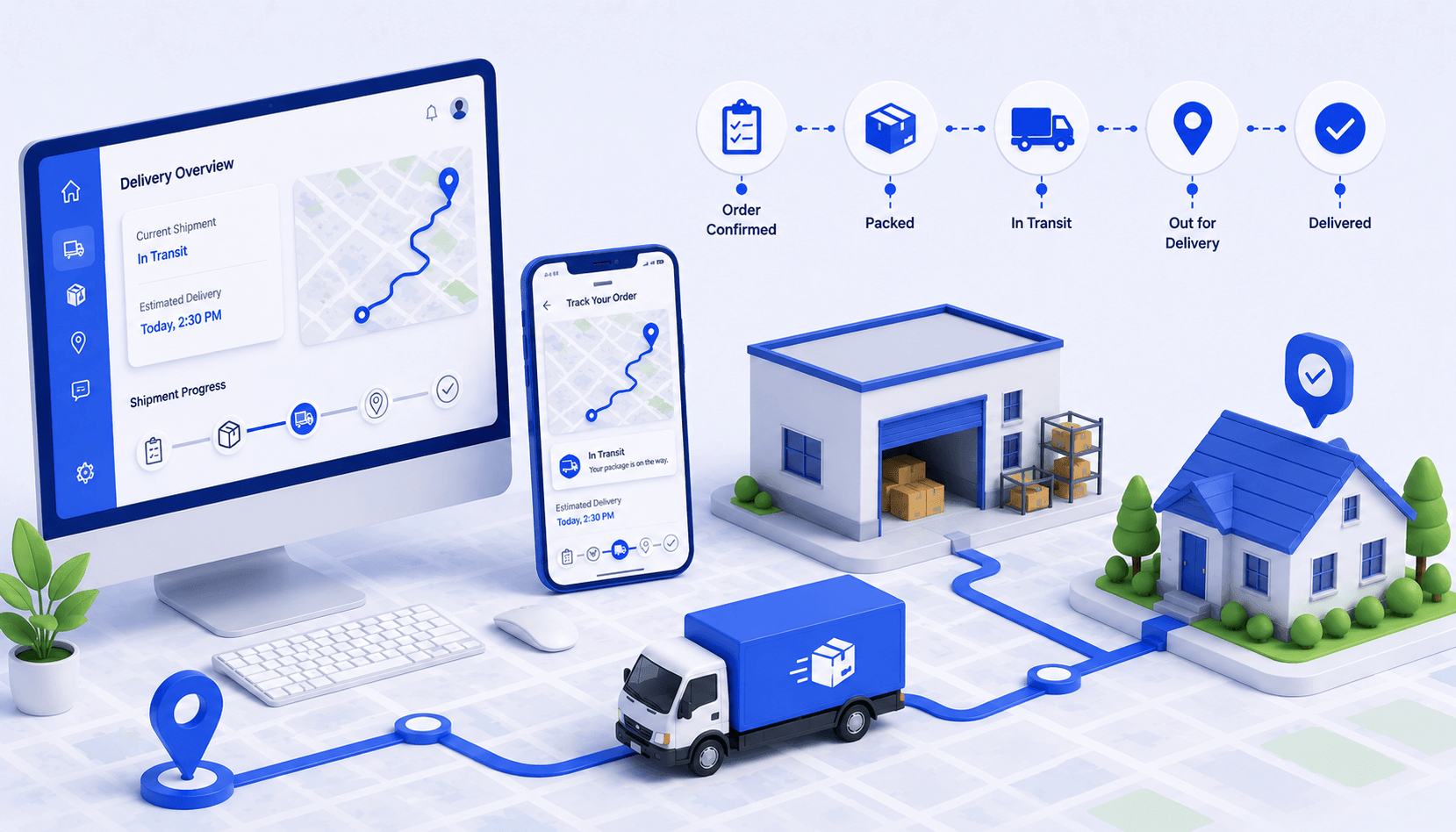
SMS and email updates at key milestones (out for delivery, arriving soon, delivered) reduce inbound “where is my delivery” calls by 40-60%. Proactive communication sets accurate expectations and gives customers visibility into their delivery without needing to pick up the phone. When customers know their package is on the way, they stop calling.
Use Barcode Scanning for Package Verification
Scan-to-confirm at every stop ensures the right package reaches the right address. A barcode scanner creates a digital chain of custody from warehouse to doorstep, eliminating wrong-delivery disputes entirely. This is especially critical for high-volume operations where manual package matching introduces errors at scale.
Centralize Delivery Data in One Dashboard
When all delivery records, photos, signatures, and GPS logs live in one searchable system, dispute resolution drops from 30 minutes to under two minutes. Centralized data also reveals repeat dispute patterns, letting operations teams address systemic issues proactively instead of fighting the same fires every week.
Train Drivers on Proper Delivery Documentation
Technology only works when drivers use it consistently. Require a photo at every drop-off, even when the customer does not request one. Clear photos showing the package at the door with visible address markers make disputes nearly impossible. A consistent documentation process reduces dispute-eligible deliveries to near zero.
These six strategies work together as a system. Proof of delivery provides the evidence, GPS tracking provides the verification, notifications prevent unnecessary calls, and centralized data makes resolution instant when disputes do arise.
See it in action
Keep Customers Informed Automatically with Upper
Upper sends real-time SMS and email updates so customers always know where their delivery is. Fewer calls, fewer disputes.
The ROI of Dispute Prevention Technology
Investing in proof of delivery technology is not just a cost center. It is one of the highest-ROI investments a delivery business can make. Here is how the numbers work for a typical fleet dealing with delivery complaint costs every month.
Cost Reduction From Fewer Disputes
Digital proof of delivery reduces dispute volume by 70-90%. For a fleet processing 20 disputes per month at $116 to $345 each, a 75% reduction saves $20,880 to $62,100 annually. The payback period is often under 30 days because dispute cost savings begin immediately after implementation.
Faster Resolution for Remaining Disputes
The disputes that do occur resolve in under two minutes with photo and signature evidence on file. Agent handling time drops from 8-12 minutes to 1-2 minutes per call. Investigation time drops from 15-30 minutes to zero because the evidence is already captured and searchable. Faster resolution also improves customer satisfaction for the disputes that still come through.
Customer Retention Gains
Proactive communication and transparent delivery records build trust that keeps customers coming back. Businesses using digital proof of delivery report 15-25% fewer customer churn events related to delivery issues. Retained customers continue generating revenue without the five to seven times higher cost of re-acquisition.
Operational Efficiency Improvements
Drivers spend less time on callbacks and return visits, completing more deliveries per shift. Dispatchers spend less time investigating and mediating, focusing on route optimization and operational improvements instead. Managers redirect former dispute-handling hours toward growth activities like expanding service areas and onboarding new clients.
ROI Calculation: Before vs. After Proof of Delivery
| Metric | Before | After (With POD) |
| Monthly disputes | 20 | 5 |
| Cost per dispute | $200 (avg) | $30 (avg, faster resolution) |
| Monthly dispute cost | $4,000 | $150 |
| Monthly savings | – | $3,850 |
| Annual savings | – | $46,200 |
| Software investment | – | $1,200-$3,600/year |
| Net annual ROI | – | $42,600-$45,000 |
The math is straightforward. Even conservative estimates show a 10-30x return on investment for proof of delivery technology, making it one of the most defensible line items in a delivery fleet’s budget.
Cut Delivery Dispute Costs With Upper’s Proof of Delivery
Delivery dispute calls are not just a customer service problem. They are a financial drain that compounds across direct costs, operational overhead, driver productivity, and customer lifetime value. For a mid-size fleet, the annual cost of delivery disputes can exceed $80,000, and the vast majority of that is preventable.
Upper gives delivery teams the tools to eliminate the root causes of disputes before they happen. With digital proof of delivery, drivers capture photos, e-signatures, and delivery notes at every stop, creating an indisputable record that resolves any question in seconds.
Delivery businesses using Upper report 70-90% fewer delivery disputes within the first 90 days. That translates directly to lower call center costs, fewer refunds, less driver downtime, and higher customer retention. The proof of delivery ROI pays for the platform many times over.
Stop losing thousands of dollars a month to preventable delivery disputes. Book a demo to see how Upper’s proof of delivery system pays for itself in weeks, not months.
Frequently Asked Questions
Industry data suggests that 60-75% of delivery disputes stem from insufficient or missing proof of delivery. When drivers cannot produce a photo, signature, or timestamp confirming the delivery, businesses have no evidence to counter the customer’s claim.
Digital proof of delivery captures photos, e-signatures, GPS timestamps, and delivery notes at every stop. This creates an indisputable record that resolves disputes in under two minutes instead of 30. Businesses using digital POD report 70-90% fewer disputes overall.
Without documented proof, resolving a delivery dispute takes 30 to 45 minutes on average. This includes the initial customer call (8-12 minutes), dispatcher investigation (15-30 minutes), and follow-up communication. With digital proof of delivery, resolution drops to under two minutes.
A mid-size delivery fleet with 15 to 25 drivers typically processes 15 to 30 delivery disputes per month. High-volume operations or fleets without digital proof of delivery systems may see 40 to 60 disputes monthly. The rate varies by industry, delivery volume, and documentation practices.
Yes. Automated SMS and email notifications at key delivery milestones (out for delivery, arriving soon, delivered) reduce inbound “where is my delivery” calls by 40-60%. Proactive communication sets accurate expectations and gives customers visibility without needing to call.
Most delivery businesses see a 10-30x return on investment from proof of delivery software. A fleet spending $4,000 per month on dispute-related costs can reduce that to under $200 per month with digital POD, saving over $45,000 annually against a software cost of $1,200 to $3,600 per year.