


- Choose delivery management software based on workflow fit rather than relying on feature-list length or public star ratings.
- Evaluate route planning, dispatch, live control, customer communication, proof of delivery, and reporting together as one connected operating workflow.
- Upper, Onfleet, Detrack, Track-POD, Routific, OptimoRoute, and other shortlisted platforms address different delivery requirements, so the right choice depends on your specific operation.
- Public pricing and ratings can change quickly, so request written vendor pricing and scope based on your actual delivery volume, constraints, and operating rules.
- A reliable software pilot should use your own stops, drivers, time windows, capacity rules, exceptions, and completion records to validate real-world performance.
When your route planning, driver management, and proof of delivery live in separate tools, a normal delivery day creates avoidable work. Dispatchers copy order data, drivers receive conflicting updates, customers ask what changed, and completion records arrive too late to settle a dispute or release an invoice.
The pressure is growing, but speed is not the only requirement. The U.S. Census Bureau estimated $326.7 billion in retail e-commerce sales in Q1 2026, up 9.8% from Q1 2025 and equal to 16.9% of total retail sales. At the same time, a McKinsey survey of more than 1,000 U.S. consumers found that 90% were willing to wait two or three days for a delivery, especially to avoid shipping costs. Reliability, visibility, and cost control belong in the buying decision alongside route speed.
I have spent years at Upper watching delivery teams choose software from feature grids and then discover the gap on their first difficult day. This guide compares 12 active delivery management platforms by the workflow each one is best aligned with. You will see what each product appears to cover, what you should verify with the vendor, and how to run a pilot that exposes the real fit before you commit.
What Belongs in a Delivery Management Software Shortlist?
A delivery management software shortlist should include products that can carry your work from order intake through planning, dispatch, field execution, customer communication, proof, and review at the depth your operation requires.
The category is broad. Some products are route planners with delivery controls. Others are proof-first systems, on-demand dispatch platforms, or orchestration layers that connect internal drivers with outside carriers. A product can be strong and still be wrong for your operating pattern.
Do not assume that delivery management software also replaces shipping software, warehouse management, telematics, vehicle maintenance, or a transportation management system. Write down which system owns each record and where a handoff must occur. That boundary prevents you from paying for overlapping software or discovering a gap after rollout.
Define the Workflow Before the Feature List
Start with the day you need the product to control. Map how orders arrive, which rules affect assignment, how routes are built, how changes reach drivers, what customers receive, which proof is mandatory, and which data must flow to billing or customer service. Features become meaningful only when each one has a job in that chain.
Separate a Delivery Platform From a Route-Planning App
A route-planning app mainly decides stop order. A delivery management platform normally extends into dispatch, status, customer communication, proof, and reporting. If you only need one person to sequence stops, a full platform may add cost and administration. If several people must coordinate changes and records, a route app alone may create new manual work around the edges.
That distinction gives you a fair way to compare unlike products. The next step is to make the selection method equally clear.

See it in action
Plan Routes Around Real Rules
Test time preferences, capacities, priorities, service times, and route edits.

How Did We Choose These 12 Delivery Management Platforms?
We shortlisted active products with public evidence of delivery planning or dispatch plus at least one execution layer such as tracking, customer updates, proof of delivery, or operational reporting.
This is an editorial comparison based on current public product information, stable category signals, and workflow coverage as of August 20, 2026. We did not rank products by vendor-supplied performance numbers, public prices, or a single review score. We also did not claim hands-on testing that we cannot document.
Upper publishes this guide and is included in the shortlist. We use the same format for Upper as for every other product: fit, current public scope, and a question the buyer should verify. Independent directories show how crowded the market is, but they are not a substitute for due diligence. Software Advice displayed 198 products in July 2026 and disclosed that vendors pay for referrals, while Capterra described its own research and review-moderation process. The FTC’s consumer-review rule is another reason to treat ratings as one signal, not the verdict.
- Product is active and has a current official product page.
- Public scope includes delivery route planning or dispatch plus an execution layer.
- The product represents a distinct buyer pattern or remains relevant to the live page’s established shortlist.
- Claims can be scoped to the vendor’s current documentation without repeating unverified savings, setup times, or customer-review conclusions.
- A buyer can test the product using a real operating day and request a written commercial scope.
Market references: Capterra delivery management category; Software Advice delivery management directory; and FTC guidance on consumer reviews and testimonials.
With the method stated, you can use the shortlist as a set of candidates instead of mistaking it for a universal ranking.
Which Delivery Management Software Platforms Should You Compare?
The strongest comparison set spans route-first, proof-first, local-dispatch, and last-mile orchestration products, because different delivery workflows need different control layers.
The table below is a starting point, not a podium. Use the second column to find plausible matches, then use the pilot question to test where the product’s public story may hide a plan limit, module dependency, or workflow mismatch. Product details can change, so confirm the final scope in writing.
We retained the live page’s 12-product breadth and updated Circuit’s team-product reference to Spoke, the destination of the current Circuit URL. We did not publish prices, review scores, or free-trial terms because those fields change faster than the operating fit.
| Platform | Best aligned with | Pilot question |
|---|---|---|
| Upper | Route planning through proof for location-based delivery work | Can it model your rules and recover cleanly when the day changes? |
| Detrack | Electronic proof, tracking, notifications, and route planning | Which functions and retention terms are included in the proposed plan? |
| RouteManager | Routing and dispatch for courier, distribution, food, and white-glove work | Do its planning, simulation, and field workflows match your daily change pattern? |
| Onfleet | Last-mile orchestration across internal and external delivery capacity | How will task volume, carrier use, integrations, and proof affect scope? |
| Tookan | On-demand allocation, delivery orchestration, and branded interfaces | Which apps, extensions, and workflow changes are required for your use case? |
| Track-POD | Document-heavy proof of delivery, scanning, and delivery records | Does the field workflow work offline and produce the exact record you need? |
| Zippykind | Local delivery dispatch, tracking, customer updates, and simple proof | Which routing and messaging functions are included versus added separately? |
| Routific | Route-first last-mile planning with dispatch and customer tracking | Does it handle your difficult constraints and data-import process? |
| Spoke | Driver route planning plus a courier delivery-management product | Are you evaluating the driver app or the multi-driver courier platform? |
| Route4Me | Configurable route-management modules and territory workflows | Which modules are required to reproduce one complete operating day? |
| Shipday | Local restaurant, retail, and courier delivery coordination | Do order intake, driver supply, routing, and proof work with your current stack? |
| OptimoRoute | Multi-day route planning and field-service scheduling | Can it preserve your constraints during re-planning and day-of changes? |
1. Upper: Connected Route Planning, Dispatch, Proof, and Customer Updates
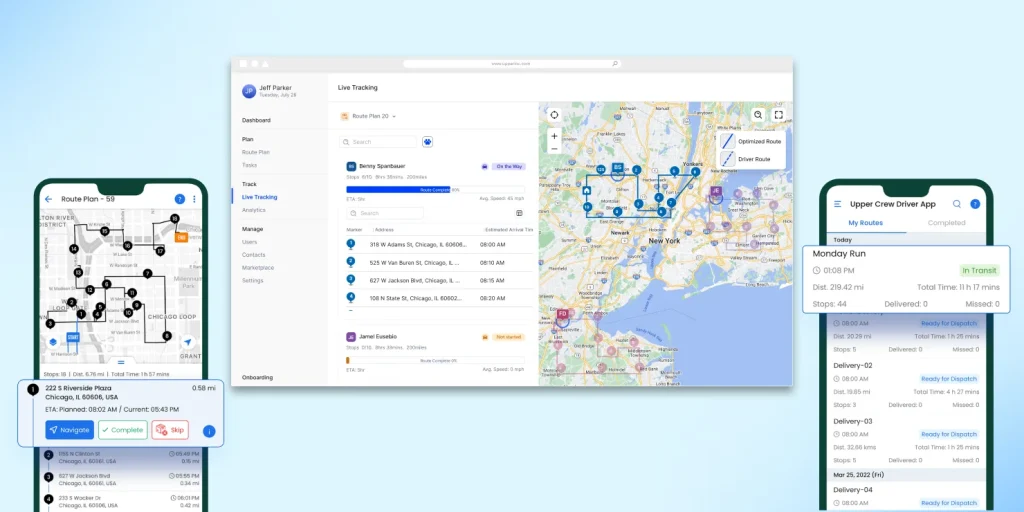
- Why it made the shortlist: Upper Crew carries multi-stop work from spreadsheet import and route planning into driver dispatch, live progress, proof of delivery, customer notifications, and route analytics. It is best aligned with delivery businesses that want one operational workspace between a stop list and a completed, documented route. Upper also offers Solo for a person who plans and drives their own routes. Because Upper publishes this comparison, treat this description as a product claim to verify in a real pilot.
- Verify before buying: Run a difficult day with your time preferences, service times, priorities, capacities, route edits, and proof requirements. Confirm any integration or rule that is essential to your workflow, and do not assume exact arrival times.
Product scope checked against the current Upper product page.
2. Detrack: Electronic Proof of Delivery and Delivery Visibility

- Why it made the shortlist: Detrack publicly combines signatures, photos, timestamps, live driver tracking, customer notifications, route planning, vehicle checks, analytics, rate cards, and integrations. That makes it a strong candidate when proof and customer communication are central, with routing added to the same field workflow. Its public material also describes recurring jobs and capacity reporting, which may matter to scheduled delivery work.
- Verify before buying: Ask which plan contains route optimization, recurring jobs, storage duration, safety checks, and the integrations you need. Test photo, signature, scan, exception, and offline behavior with the exact phones your drivers use.
Product scope checked against the current Detrack product page.
3. RouteManager: Route Planning and Dispatch for Established Route Operations
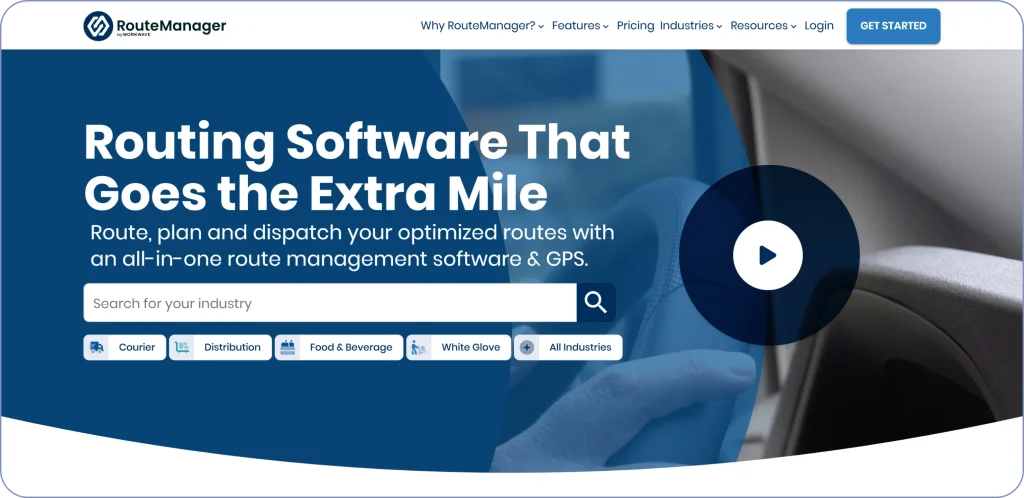
- Why it made the shortlist: RouteManager, associated with WorkWave, presents an all-in-one routing and GPS product for courier, distribution, food and beverage, catering, white-glove, and other field workflows. Its public feature set includes route planning, dispatching, a driver app, customer notifications, analytics, tracking, an API, and route simulations. It deserves a look when route design and repeatable planning decisions are the center of the operation.
- Verify before buying: Reproduce a busy period and a day with several schedule changes. Confirm the completion-record workflow, reporting history, mobile behavior, and which package contains the notification and driver functions your team expects.
Product scope checked against the current RouteManager product page.
4. Onfleet: Last-Mile Orchestration Across Internal and Outside Capacity
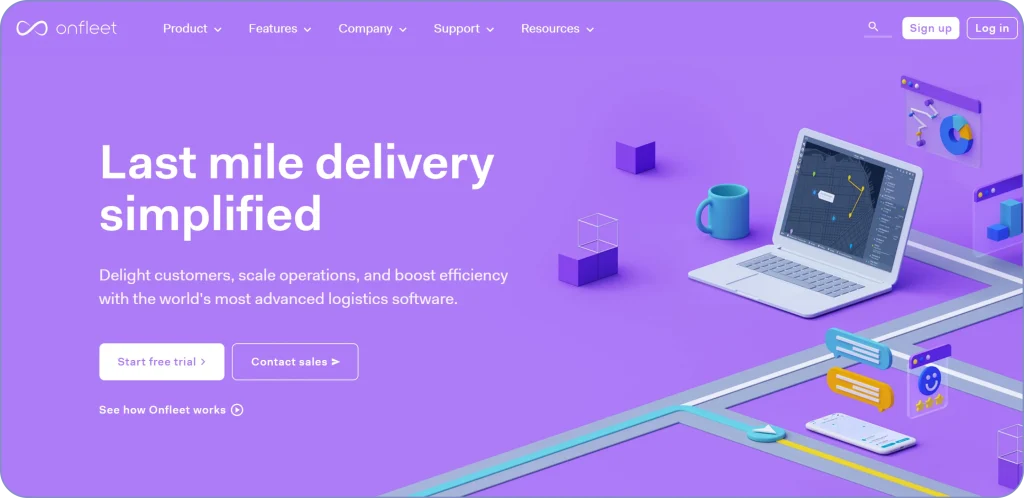
- Why it made the shortlist: Onfleet’s current product pages emphasize route optimization, assignment and dispatch, live tracking, a driver app, customer experience, analytics, integrations, carrier coordination, and proof of delivery. That breadth is relevant when you manage orders across internal drivers, courier partners, or both, and want the customer-facing tracking experience connected to dispatch.
- Verify before buying: Model your normal task volume, peak volume, carrier mix, API calls, notification usage, and proof requirements. Ask the vendor to show how exceptions move across internal and external delivery capacity without losing ownership or history.
Product scope checked against the current Onfleet product page.
5. Tookan: On-Demand Allocation and Configurable Delivery Orchestration
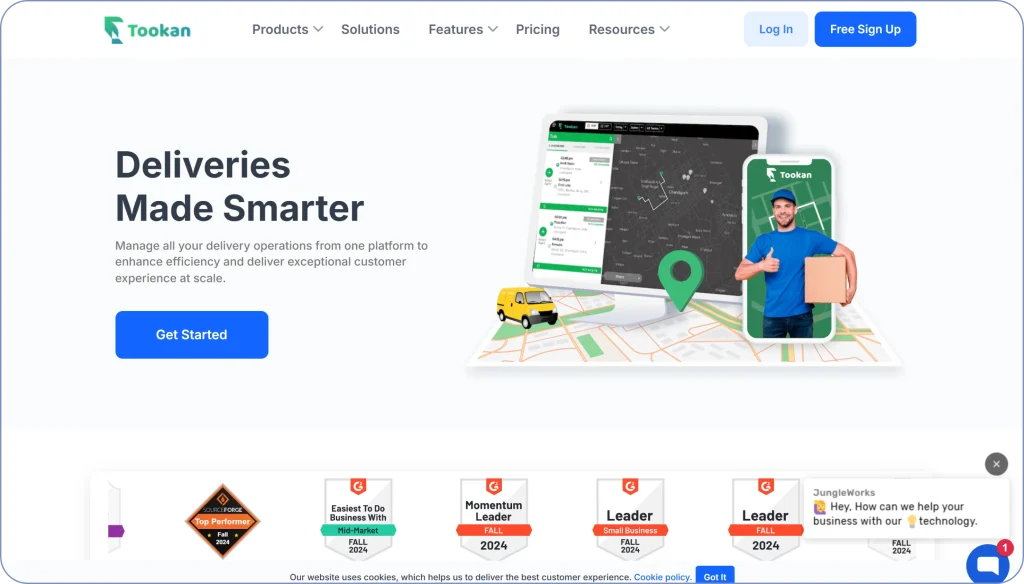
- Why it made the shortlist: Tookan’s public scope includes order management, automated allocation, dispatch planning, route optimization, capacity management, delivery orchestration, live tracking, customer and agent apps, reporting, booking forms, and extension options. It is a plausible fit when rapid order intake and assignment matter as much as planned routes, or when the buyer needs several branded interfaces around an on-demand workflow.
- Verify before buying: Identify which functions are native, which require an extension or adjacent Jungleworks product, and which require process changes. Test the nearest-available allocation rule against workload, territory, priority, and capacity cases rather than accepting proximity as the whole decision.
Product scope checked against the current Tookan product page.
6. Track-POD: Proof-Heavy Delivery Records and Load Control
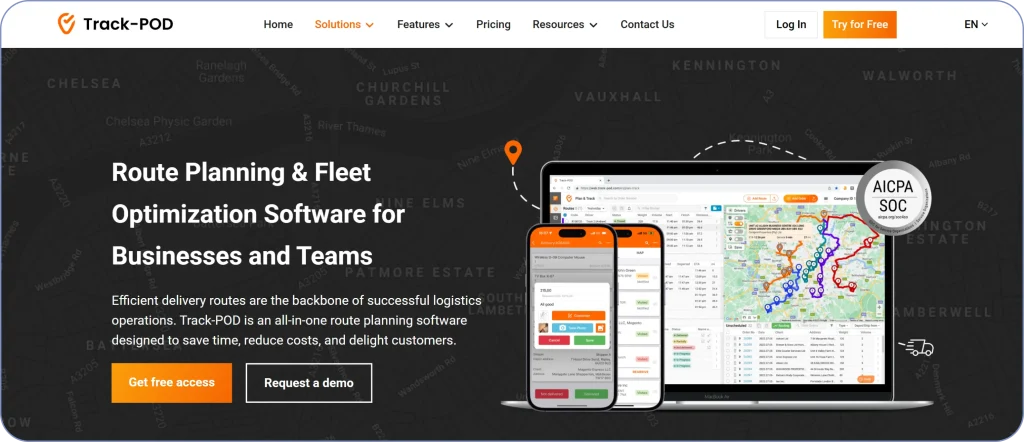
- Why it made the shortlist: Track-POD combines route planning, scheduling, live courier tracking, customer notifications, analytics, signatures, photos, geotags, timestamps, barcode or QR scanning, and generated delivery documents. It stands out when the completion record is operationally important and scanning or paper replacement belongs in the same evaluation as routing.
- Verify before buying: Build sample delivery, partial-delivery, refusal, damage, collection, and no-signal scenarios. Confirm which documents the platform creates, how fields can be configured, how long records remain searchable, and how those records move into your ERP or accounting process.
Product scope checked against the current Track-POD product page.
7. Zippykind: Straightforward Local Delivery Dispatch and Customer Tracking
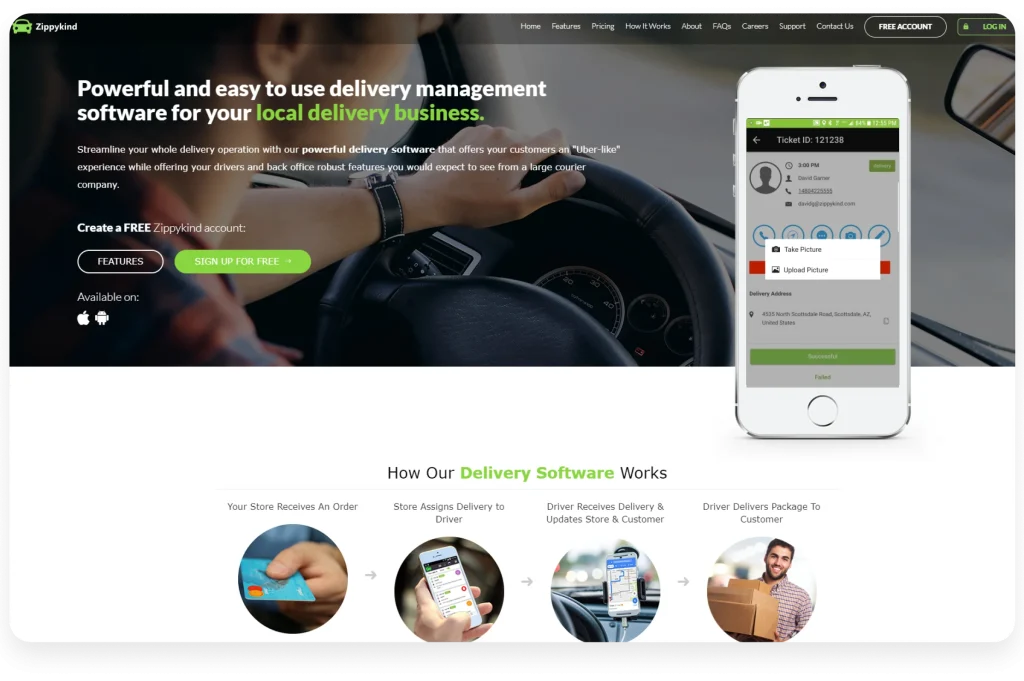
- Why it made the shortlist: Zippykind’s current site describes local-delivery route optimization, automated assignment, real-time driver tracking, customer alerts, a brandable tracking page, photos, signatures, and GPS logging. It remains a relevant candidate for florists, restaurants, ready-made meals, retail, documents, and similar local delivery patterns that need a lighter dispatch layer.
- Verify before buying: Ask for a written list of what is included in the proposed package and what is added separately. Test route editing, customer messages, proof capture, territory logic, reporting, and order intake at both normal and peak conditions.
Product scope checked against the current Zippykind product page.
8. Routific: Route-First Last-Mile Planning With Dispatch Visibility
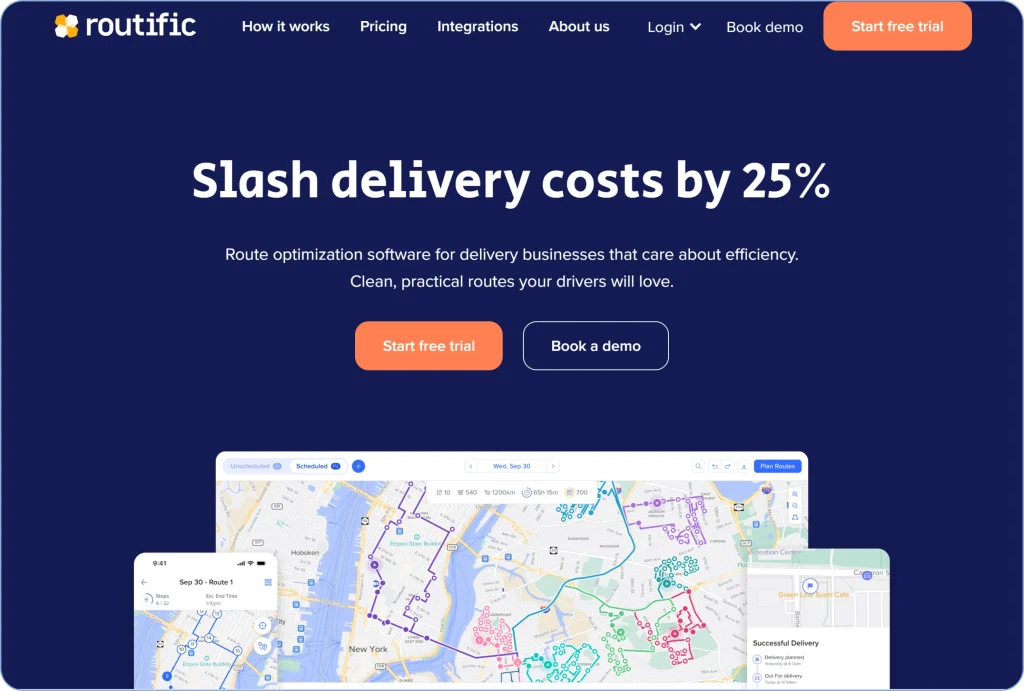
- Why it made the shortlist: Routific focuses on last-mile delivery route optimization, practical route editing, a driver app, live progress, customer tracking, notifications, proof, and end-of-day data. It is a strong comparison candidate when the planning team wants clean routes and a focused delivery workflow without starting from a broad enterprise operations suite.
- Verify before buying: Use messy addresses, time windows, stop durations, driver preferences, recurring work, late additions, and import errors in the pilot. Confirm whether the integration and barcode or scanning requirements in your operation are supported directly or through another tool.
Product scope checked against the current Routific product page.
9. Spoke: Driver Route Planning or Courier Delivery Management
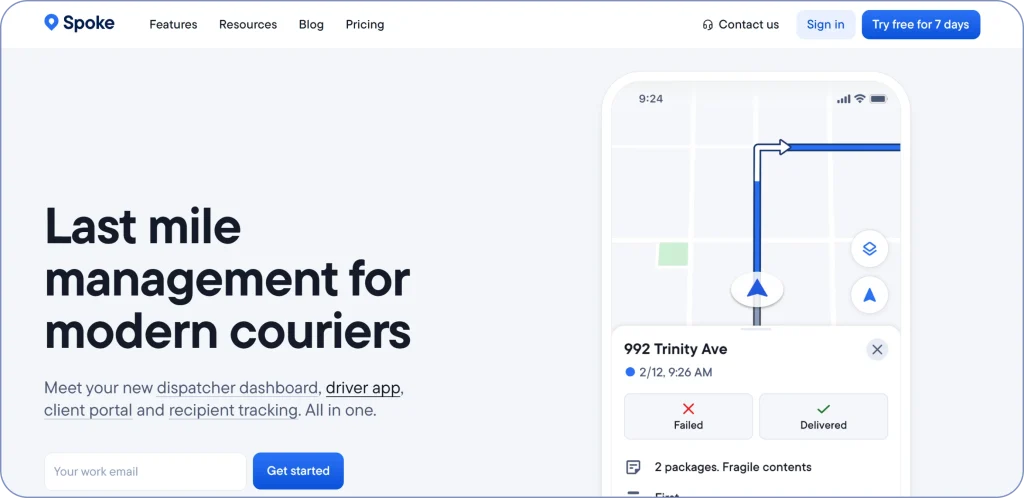
- Why it made the shortlist: Circuit rebranded to Spoke in October 2025. The solo driver app is now Spoke Route Planner and the multi-driver courier platform is now Spoke Dispatch, formerly Circuit for Teams. The courier product publicly covers multi-driver route planning, progress tracking, and proof of delivery. That split matters because a solo driver and a dispatcher coordinating a team should not be forced into the same buying test.
- Verify before buying: Confirm which Spoke product you are evaluating. For Spoke Dispatch, test dispatcher controls, proof, customer updates, user roles, route changes, and reporting. For Spoke Route Planner, verify stop limits and whether team visibility is actually needed, since the driver app does not carry multi-driver dispatch, proof, or notification features.
Product scope checked against the current Spoke product page.
10. Route4Me: Configurable Route Management and Territory Workflows
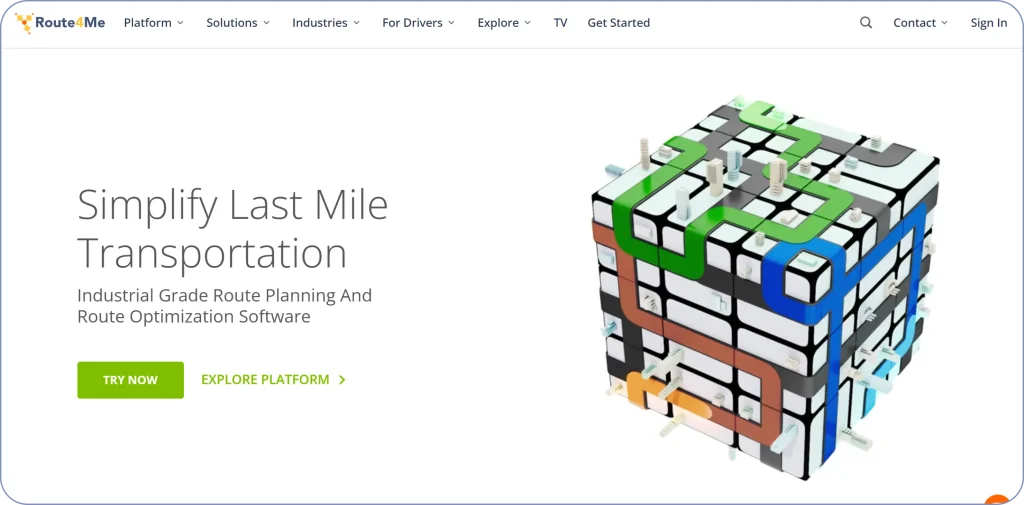
- Why it made the shortlist: Route4Me presents a broad last-mile platform with route planning, dispatch and tracking, driver tools, business operations, customer experience, insights, integrations, telematics connections, commercial routing, and modular services. It is worth comparing when the buyer expects configuration depth or needs to coordinate route planning with territories and adjacent fleet data.
- Verify before buying: List the exact modules required for one end-to-end workflow and ask the vendor to price that scope as a whole. Pilot administration, permissions, mobile execution, route changes, proof, exports, and support, not just the first optimized route.
Product scope checked against the current Route4Me product page.
11. Shipday: Local Restaurant, Retail, and Courier Delivery Coordination
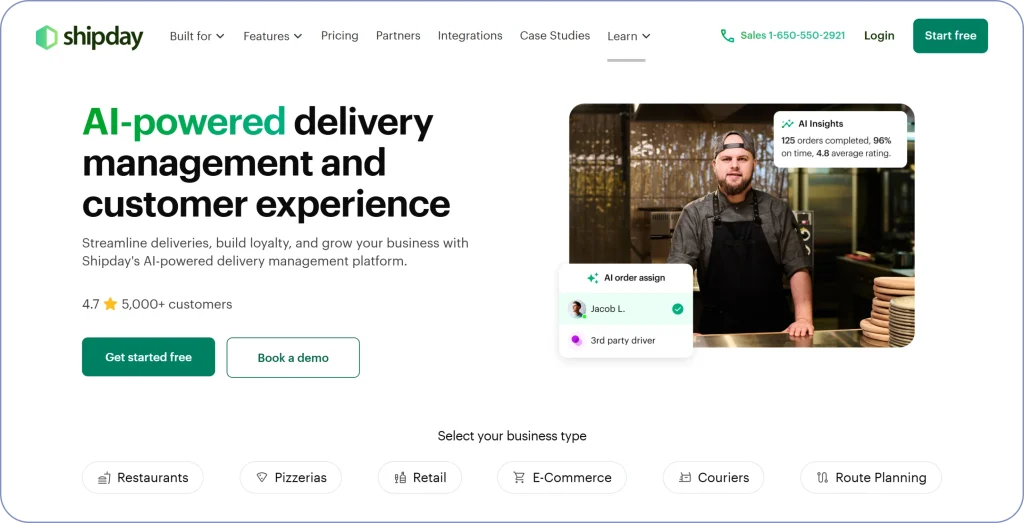
- Why it made the shortlist: Shipday’s current platform covers delivery order management, dispatch, driver tracking, customer updates, proof of delivery, route optimization, chat, and order or delivery connections. Its public positioning makes it relevant to restaurants, local stores, meal delivery, and courier workflows where orders may arrive throughout the day and customer visibility matters.
- Verify before buying: Test your actual order sources, driver-supply model, scheduled and on-demand mix, customer-message rules, proof, and dispatch changes. Confirm what the platform does itself and where it connects to outside delivery services or commerce systems.
Product scope checked against the current Shipday product page.
12. OptimoRoute: Multi-Day Route Planning and Field-Service Scheduling
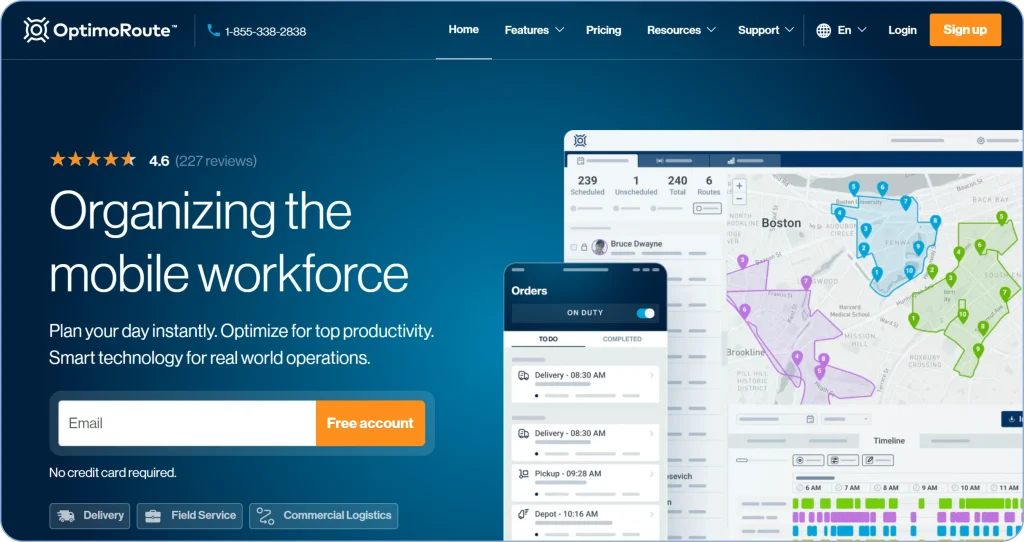
- Why it made the shortlist: OptimoRoute publicly combines delivery route planning, field-service scheduling, live tracking, customer notifications, proof of delivery, workload balancing, and planning across several days. It belongs on the list for scheduled delivery and service patterns where the planner needs to look beyond one route or one day.
- Verify before buying: Test long-horizon plans and day-of changes with driver schedules, breaks, stop durations, time windows, pickups, capacities, and recurring work. Confirm which constraints remain fixed during re-planning and what happens when no plan can satisfy them all.
Product scope checked against the current OptimoRoute product page.
The profiles narrow the field, but the final comparison should happen by workflow pattern. That is where two products with similar feature labels often separate.
How Do the 12 Platforms Fit Different Delivery Workflows?
The right platform depends on where your operation loses control: route design, order orchestration, field proof, or rapid local dispatch.
Use the matrix to decide which products deserve a pilot first. It is normal for a platform to appear in more than one pattern. The purpose is to start with the operational failure you need to fix, then verify the adjacent layers.
Do not translate these patterns into a public fleet-size rule. The same number of drivers can hide very different route density, order intake, capacity, time-window, proof, and integration requirements.
| Workflow pattern | What usually decides the fit | Platforms to compare first |
|---|---|---|
| Route-first scheduled delivery | Dense stop lists, recurring routes, time windows, route edits | Upper, Routific, OptimoRoute, Route4Me, RouteManager |
| Last-mile orchestration | Internal drivers, outside couriers, live order visibility, integrations | Onfleet, Tookan, Shipday |
| Proof-first delivery | Signatures, photos, scans, delivery documents, record retrieval | Detrack, Track-POD |
| Local or courier dispatch | Fast intake, driver assignment, customer tracking, simple field use | Spoke, Zippykind, Shipday |
Route-First Scheduled Delivery
Prioritize the quality and controllability of the plan. The pilot should include dense routes, recurring customers, several time preferences, different service times, planned breaks, pickups, and a late order. Check whether a dispatcher can understand why the plan looks the way it does and change it without rebuilding the day.
Last-Mile Orchestration
Prioritize order ownership and visibility across fulfillment options. Test how the platform chooses between internal drivers and outside capacity, how it handles a rejected or failed job, what the customer sees, and whether the completion record returns to the order system.
Proof-First Delivery
Prioritize the field record. Test required signatures, photos, scans, quantities, refusals, damage, notes, recipient identity, offline work, and retrieval. The proof should support the business process that follows, such as customer service, billing, returns, or a compliance review.
Local or Courier Dispatch
Prioritize fast intake and clear assignment. Test planned routes and new orders that arrive mid-day, then verify how the driver, dispatcher, customer, and business record stay aligned. A fast driver app does not compensate for weak office controls when several people are changing the same plan.
Once you know your workflow pattern, you can run a buying process that measures fit instead of collecting demos.
What Should You Test Before Choosing Delivery Management Software?
Test one difficult operating day from intake to proof, then score the plan, change control, field execution, customer experience, records, data flow, and support.
A polished vendor demo proves that the vendor can run its demo. Your pilot must prove that your team can run your work. Use real but safely handled addresses, roles, rules, phones, and exception cases, with a written expected outcome for each test.
Include dispatchers and drivers in the score, plus the people who use delivery data afterward. Customer service may care about tracking and retrieval. Finance may care about order status and proof. IT may care about identity, permissions, integration, export, retention, and security review.
1. Build a Representative Test Day
Include normal deliveries, an urgent insertion, a cancellation, a failed stop, a return or pickup, a driver absence, and at least one rule that makes the cheapest-looking assignment invalid. That mix exposes whether the product manages execution or only creates a good first route.
2. Verify Every Hard Rule and Preference
Create a rule register before the demo. Mark each item as hard, preferred, manual, unsupported, or handled by another system. If regulated property-carrying drivers are in scope, do not accept a generic compliance claim. FMCSA’s current summary includes an 11-hour driving limit after 10 consecutive hours off, a 14-hour on-duty window, and a 30-minute break after 8 cumulative driving hours without a qualifying interruption. Ask the vendor to show which rule is enforced, which is merely displayed, and which remains your responsibility.
Source: FMCSA hours-of-service summary.
3. Test Changes After Dispatch
Add, remove, move, and reassign work after routes reach the field. Watch what happens to the remaining sequence, customer messages, driver instructions, proof requirements, and reporting. Record whether the system warns about an impossible or undesirable plan before the change is released.
4. Test the Field Workflow in Poor Conditions
Use the devices and connection conditions drivers actually face. Check login, navigation handoff, route updates, status, notes, photos, signatures, scans, failed-stop reasons, battery impact, and offline recovery. A feature that takes too many steps at the curb will be skipped under pressure.
5. Confirm Customer Communication Boundaries
Review every message trigger and tracking view. Make sure customers can distinguish a planned window from a live estimate, and make sure updates change when the route changes. Do not let marketing language about accurate ETAs become an exact arrival promise your operation cannot keep.
6. Follow the Data Into the Next System
Trace one order from source to completion and export. Verify IDs, customer fields, line items, notes, timestamps, exceptions, proof files, status mapping, duplicates, retries, permissions, retention, and failure alerts. An integration is not complete until your team knows how errors are found and fixed.
7. Compare the Written Commercial Scope
Ask each vendor to price the same workload and list every included module, usage meter, message type, driver or user role, integration, onboarding service, support level, data-retention term, and renewal condition. Compare total scope, not a base price shown on a public page.
| Pilot area | What to measure | Pass condition |
|---|---|---|
| Plan quality | Missed rules, route overlap, manual corrections | The plan is workable without hidden exceptions. |
| Planning effort | Import, cleanup, planning, review, and release time | The full planning cycle is faster and more predictable. |
| Change control | Time and clicks to add, remove, move, or reassign work | The system shows the downstream impact before release. |
| Field execution | Driver confusion, app steps, offline behavior, exception capture | Drivers can complete normal and abnormal stops correctly. |
| Customer experience | Notification timing, tracking clarity, failed-delivery causes | Messages reflect the current plan without overpromising. |
| Proof and records | Missing photos, signatures, timestamps, scans, or notes | The completion record is searchable and usable downstream. |
| Data and support | Import errors, export gaps, permissions, response paths | Your team can recover without creating a shadow spreadsheet. |
The scorecard turns a product preference into an operating decision. It also creates the baseline you need to judge the rollout after selection.
See it in action
Make Every Completion Usable
Capture photos, signatures, notes, and timestamps with the delivery record.
What Does a Measurable Delivery-Software Rollout Look Like?
A measurable rollout starts with a narrow workflow, records the before state, trains through real exceptions, and expands only after planning, execution, proof, and data handoffs work together.
Begin with a route family or operating pattern that is important enough to matter but contained enough to observe. Capture planning time, completed stops, change effort, exception reasons, proof completeness, customer contacts, and record-retrieval time before you change the process. Then measure the same fields during the pilot.
Public Upper evidence shows why a workflow baseline is more useful than a generic savings claim. WinWaste is a waste-collection operation, not a parcel-delivery company, but its recurring multi-stop planning, field dispatch, photo record, and route-change problems match the operating pattern this software category is meant to control. The published story reports the following before-and-after results.
| Measure | Before Upper | After Upper |
|---|---|---|
| Daily workload | 200-300 stops across 5 field crew members | Managed in one route-and-proof workflow |
| Daily route planning | 45-60 minutes | Under 10 minutes |
| Stops completed per crew member | 40-50 per day | 55-65 per day, reported as 30% more |
| Driver productivity | Baseline | 52% increase reported in the public story |
| Photo record access | Scattered across devices; retrieval took hours | Centralized for 2+ years; retrieval in seconds |
| Initial rollout | Not applicable | About 2 days |
| New government contracts | Baseline | 8 in the first 2 months |
Public customer source and full context: WinWaste success story. Results belong to this customer and are not a general forecast.
Use the same discipline for your rollout: define the unit, period, baseline, owner, and data source for each measure. Expand only when the new workflow improves the intended result without creating a new manual workaround somewhere else.
With a measured pilot and a controlled rollout, the final decision becomes simpler: choose the product that keeps your actual workflow coherent when the day changes.
Which Delivery Management Platform Should You Choose?
Choose the platform that controls your hardest delivery workflow with the fewest unsupported assumptions, then confirm the fit through a scored pilot and a written commercial scope.
If route planning and day-of delivery execution are your main gap, compare Upper, Routific, OptimoRoute, Route4Me, and RouteManager first. If proof and document control drive the decision, begin with Detrack and Track-POD. If you coordinate on-demand orders, local couriers, or outside delivery capacity, Onfleet, Tookan, Shipday, Spoke, and Zippykind deserve a closer look.
Upper is built for businesses whose day is locations served by drivers, vehicles, or crews. Upper Crew turns a stop list into driver-ready routes, sends the work to the field, keeps the office informed, captures proof of delivery, sends customer updates, and records route performance. It is a practical candidate when you want that workflow in one product and do not want to assemble a routing engine yourself.
Bring one difficult delivery day to a live review. Book an Upper demo to test your stops, constraints, dispatch changes, and proof requirements before you decide.
FAQs About Delivery Management Software
Delivery management software coordinates the work between receiving an order and completing the delivery. Depending on the platform, it may include route planning, dispatch, driver status, live tracking, customer notifications, proof of delivery, exception management, analytics, and integrations with order or billing systems.
No. Route-planning software primarily focuses on creating or sequencing routes. Delivery management software typically extends beyond planning into dispatch, delivery execution, tracking, customer communication, proof of delivery, and reporting. Some platforms provide both capabilities, while others focus on a specific part of the workflow.
Usually not. Shipping software commonly focuses on carrier rates, shipping labels, postage, and parcel handoff. Delivery management software focuses on planning, assigning, executing, tracking, and proving deliveries. Depending on the operation, a business may use both systems and connect them through order and delivery-status data.
Pilot the smallest number of platforms that represents the distinct workflow options you are considering. For many teams, this could include a route-focused candidate, a proof-of-delivery or orchestration-focused candidate when relevant, and an alternative with a different pricing or implementation model. Stop adding vendors when another demo does not test a new requirement or hypothesis.
Start with the workflow that creates the most manual work or customer risk. If one person primarily needs stop sequencing, a focused route-planning app may be sufficient. If several people coordinate orders, drivers, changes, customer updates, and proof of delivery, compare broader delivery management platforms. Use your actual operating workflow rather than choosing solely based on fleet size.
No. Review scores can help identify recurring strengths and weaknesses, but they combine different industries, use cases, product versions, and buyer expectations. Look for recent reviews from businesses with workflows similar to yours, then verify important claims through a product demonstration, pilot, or written scope.
Ask each vendor to price the same workload and document every included module, user or driver role, delivery or task limits, message type, integration, onboarding service, support level, storage terms, and renewal conditions. Compare the total cost and scope required to run one complete delivery workflow rather than comparing the headline subscription price alone.


